
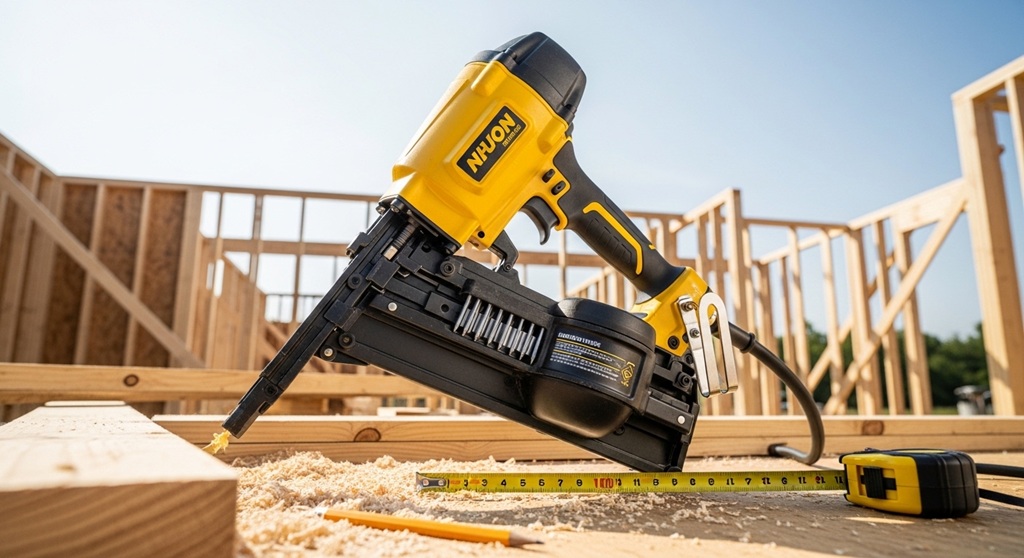
A framing nail gun is a power tool designed to drive large nails into wood quickly and accurately. Builders use it for structural tasks such as framing walls, installing subfloors, building decks, and assembling wooden structures.
Thank you for reading this post, don't forget to subscribe!Instead of hammering nails manually, a framing nailer uses compressed air, electricity, or battery power to fire nails into wood with a trigger pull. This speeds up construction, improves consistency, and reduces physical strain.
In modern construction, framing nailers are standard equipment. According to a report from the U.S. Bureau of Labor Statistics, productivity in residential framing improved significantly after pneumatic nail guns became widely adopted in the 1990s. Contractors reported up to 3x faster framing speed compared to manual hammering.
However, using the tool correctly is critical. Poor technique can lead to bent nails, damaged materials, or safety risks. That is why understanding proper framing nailer uses and applying practical framing nailer tips matters for both professionals and beginners.
This guide explains how framing nail guns work, where they are used, and how to operate them safely and efficiently on construction projects.
What Are the Most Common Framing Nailer Uses in Construction?
A framing nail gun is primarily used for structural wood construction where large nails are required.
Typical framing nailer uses include:
- Wood framing for walls and partitions
- Roof sheathing installation
- Subfloor installation
- Deck building
- Fence construction
- Wood siding installation
- Pallet and crate assembly
These tasks require strong connections between lumber pieces. Framing nailers typically drive nails ranging from 2 inches to 3.5 inches long, making them suitable for structural joints.
For example, when constructing a standard residential wall frame, contractors usually attach studs to top and bottom plates using 16d nails (3.5 inches). A framing nail gun can complete this task significantly faster than hammering each nail by hand.
Because of their power, framing nailers are not recommended for delicate trim work. For those tasks, finish nailers or brad nailers are better tools.
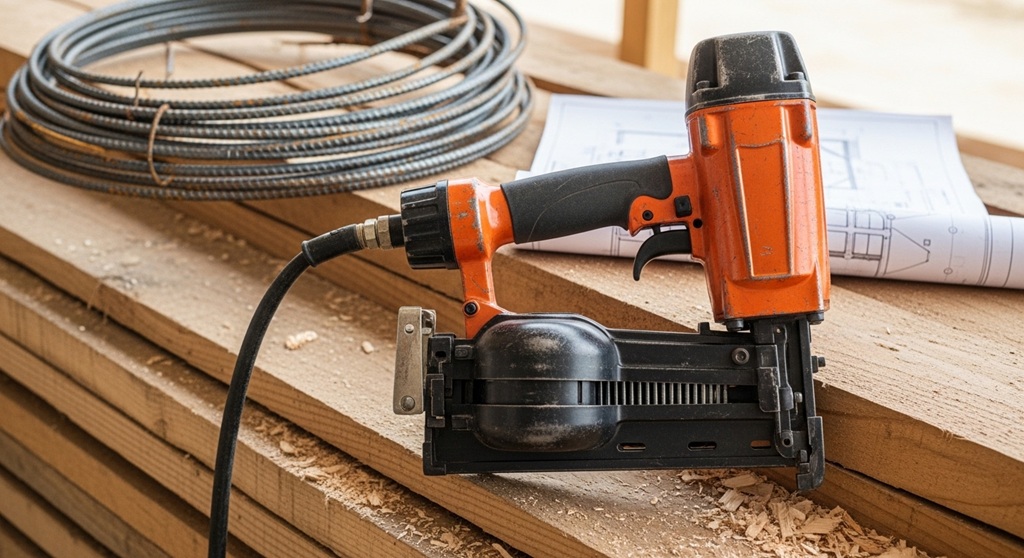
How Does a Framing Nail Gun Work?
A framing nail gun works by driving nails using mechanical force generated by compressed air, electricity, or a battery-powered motor.
The process follows these steps:
- Nails are loaded into the magazine.
- The nose of the nailer is pressed against the wood surface.
- The trigger is pulled.
- The internal mechanism drives a nail into the material.
There are three common types of framing nail guns:
| Type | Power Source | Common Use |
|---|---|---|
| Pneumatic Framing Nailer | Air compressor | Professional construction sites |
| Cordless Battery Nailer | Rechargeable battery | Portable construction tasks |
| Gas-Powered Nailer | Fuel cell + battery | Remote job sites |
Pneumatic nailers remain the most widely used because they provide consistent power and reliability for heavy-duty framing work.
How Do You Set Up a Framing Nail Gun Before Using It?
Proper setup ensures accurate nail placement and prevents equipment damage.
Follow these steps before starting a project:
1. Choose the Correct Nails
Framing nailers typically use paper-collated or plastic-collated nails. Always confirm the nail type recommended by the manufacturer.
2. Load the Magazine
Slide the nail strip into the magazine track and lock the pusher mechanism. Ensure the nails are seated properly.
3. Connect the Power Source
- Attach the air hose for pneumatic nailers.
- Insert a fully charged battery for cordless models.
4. Adjust Air Pressure or Depth Settings
For pneumatic tools, typical operating pressure ranges between 70–120 PSI. Adjust the depth control so nails sit flush with the wood surface.
5. Perform a Test Shot
Always test the nail gun on scrap wood before working on the actual project.
This ensures correct nail depth and prevents material damage.
How Do You Use a Framing Nail Gun Safely?
Using a framing nail gun safely requires proper technique and awareness. According to the U.S. Centers for Disease Control and Prevention (CDC), nail guns cause roughly 37,000 emergency room injuries per year in the United States, many involving construction workers.
These injuries often occur due to incorrect handling or lack of safety precautions.
Essential Safety Practices
- Wear safety glasses and gloves.
- Keep hands at least 12 inches away from the nail path.
- Use sequential trigger mode when possible.
- Disconnect power before clearing jams.
- Never point the nail gun at anyone.
Sequential triggers require pressing the safety tip before pulling the trigger, which reduces accidental firing.
This safety method is recommended for beginners.
What Are the Basic Steps to Use a Framing Nail Gun?
Using a framing nail gun correctly ensures strong joints and efficient workflow.
Step 1: Position the Wood Pieces
Align the lumber pieces exactly where the joint will be created. Use clamps if necessary.
Step 2: Place the Nail Gun Nose
Press the nose of the nailer firmly against the wood surface.
Step 3: Angle the Nail Correctly
For framing joints, nails are often driven at slight angles (toe-nailing) to strengthen the connection.
Step 4: Pull the Trigger
Pull the trigger smoothly. The nail will be driven instantly into the wood.
Step 5: Inspect the Joint
Ensure the nail is fully seated and the wood pieces are tightly connected.
Repeat the process for the remaining nails.
What Are the Best Framing Nailer Tips for Better Results?
Experienced builders use several practical framing nailer tips to improve efficiency and accuracy.
Use Proper Nail Spacing
For structural framing, building codes often require nails every 16 inches or less depending on the application.
Maintain Consistent Pressure
Always press the nail gun firmly against the surface before firing.
This prevents partial nail penetration.
Avoid Double Firing
Bounce firing can cause unintended nails to shoot. Beginners should use sequential mode to maintain control.
Keep the Tool Clean
Dust and wood chips can affect performance. Clean the nose and magazine regularly.
Lubricate Pneumatic Nailers
Adding a few drops of pneumatic oil daily can extend tool life and maintain performance.
What Are Common Mistakes When Using a Framing Nail Gun?
Many beginners encounter problems when first using a framing nail gun. Understanding these mistakes helps avoid wasted materials and safety risks.
Using the Wrong Nail Size
Short nails may not provide sufficient structural strength.
Incorrect Air Pressure
Low pressure leads to partially driven nails, while high pressure can damage wood.
Poor Nail Angle
Improper angles may cause nails to exit through the side of the lumber.
Skipping Test Shots
Testing on scrap wood prevents mistakes on finished structures.
Case Study: How Framing Nail Guns Improved Construction Efficiency
A 2022 residential construction productivity study conducted by the National Association of Home Builders compared manual hammer framing with pneumatic nailer framing.
The findings included:
- Wall framing completed 65% faster using nail guns.
- Worker fatigue reduced significantly.
- Average labor savings reached 2–3 hours per house frame.
This case study highlights why framing nail guns are essential tools in modern construction projects.
How Do You Maintain a Framing Nail Gun for Long-Term Use?
Proper maintenance keeps the tool operating efficiently and prevents unexpected breakdowns.
Daily Maintenance
- Clean debris from the magazine.
- Check air connections.
- Lubricate pneumatic models.
Weekly Maintenance
- Inspect the trigger mechanism.
- Check for worn seals.
- Tighten loose screws.
Storage Tips
Store the nail gun in a dry environment and disconnect power sources before storage.
Routine maintenance extends the tool’s lifespan and ensures consistent nail driving power.
Conclusion: Why Learning to Use a Framing Nail Gun Properly Matters
Framing nail guns have transformed modern construction. They allow builders to complete structural work faster, reduce physical strain, and maintain consistent results across large projects.
However, the tool’s power also demands proper technique and safety awareness.
Understanding common framing nailer uses, following correct setup procedures, and applying proven framing nailer tips can significantly improve both efficiency and safety on job sites.
Whether you are building a deck, framing a house, or assembling wooden structures, mastering this tool will help you complete projects with professional-quality results.
If you are starting your first construction project, take time to practice on scrap materials and learn how the nail gun behaves.
Ready to improve your construction workflow? Start by choosing the right framing nail gun, follow safe operating practices, and apply the tips shared in this guide to build stronger, faster, and more reliable structures.
Frequently Asked Questions About Framing Nail Guns
Can beginners use a framing nail gun?
Yes. Beginners can use a framing nail gun safely if they follow basic safety guidelines, wear protective gear, and start with sequential trigger mode to reduce accidental firing.
What size nails are used in a framing nail gun?
Most framing nailers use nails between 2 inches and 3.5 inches long. The exact size depends on the construction application.
Is a framing nailer better than hammering nails?
Yes. Framing nailers drive nails faster and more consistently than manual hammering. Studies show productivity improvements of up to three times faster on framing tasks.
Can a framing nailer be used for decking?
Yes. Framing nailers are commonly used for deck framing, joist installation, and structural deck components.
Why do framing nail guns sometimes jam?
Jams usually occur due to incorrect nails, debris in the magazine, or worn internal components. Regular cleaning and using compatible nails helps prevent jams.
How much air pressure does a framing nailer need?
Most pneumatic framing nailers operate between 70 and 120 PSI. Always follow manufacturer recommendations for optimal performance.
Do professionals prefer pneumatic or cordless framing nailers?
Many professionals prefer pneumatic nailers because they provide consistent power and lower operating costs for long construction sessions.
Read More Also: How to Pack Surfboard Accessories for Surf Trips
Find out: How to Choose the Right Pillow Firmness for Your Sleep Style