
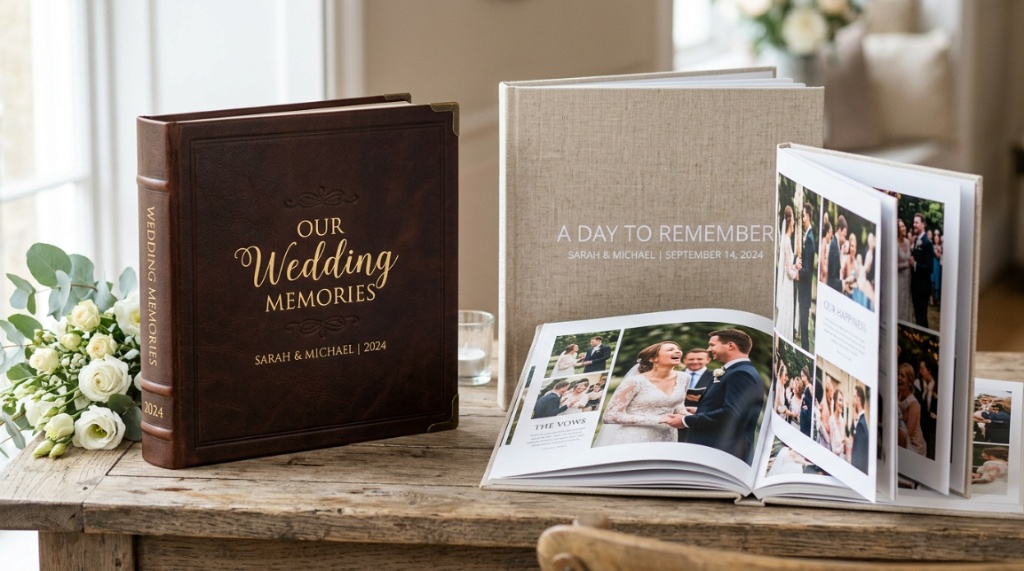
You’ve just collected thousands of stunning photos from your wedding day, and now you’re staring at a screen wondering how to preserve them. The problem is real: albums are expensive, options are endless, and the fear of choosing a low-quality product that falls apart in two years is paralyzing. But here’s the truth—finding the perfect wedding album doesn’t have to be a gamble. This guide will break down exactly how to compare the top wedding photo albums, from binding quality and paper weight to layout design and pricing. By the end, you’ll feel confident, informed, and ready to pick a keepsake that genuinely reflects your love story.
Thank you for reading this post, don't forget to subscribe!Let’s dive into the details that actually matter, not just the marketing fluff.
What Defines a Top-Tier Wedding Photo Album in 2026?
A top-tier wedding album is a premium, heirloom-quality product that combines durable construction, true-to-life color reproduction, and a design that tells your story cohesively. Unlike a simple photo book, it uses archival materials, lay-flat pages, and custom craftsmanship to preserve your memories for decades. In 2026, buyers are moving away from cheap, mass-produced options and demanding sustainable materials and handcrafted finishes.
Key Hallmarks of Premium Albums
Look for albums that use 100% cotton or leather covers, acid-free papers, and permanent adhesives. A premium album will also feature full-bleed spreads—where images run edge-to-edge without a white border—to create an immersive gallery experience. The weight and texture of the paper should feel substantial, not flimsy.
Why Material Quality Matters More Than Page Count
A 60-page album with thin, glossy pages will look cheap no matter how beautiful your photos are. High-quality lay-flat pages, however, allow guests to view double-page spreads without a crease breaking the image. Albumin or pearl papers are becoming increasingly popular in 2026 for their ability to reproduce skin tones accurately without glare.
Modern Printing Technology vs. Traditional Craftsmanship
The best vendors now use a hybrid approach: giclée printing for sharp details and hand-stitched binding for durability. Some top-tier companies even offer customizable box sets with a fine-art print to display while your album rests safely on a shelf. This blend of tech and tradition is the gold standard.
Which Album Style Fits Your Wedding Aesthetic?
The most popular styles on the market are the flush-mount album, the traditional bound book, and the modern coffee-table folio. Your choice should match your interior design, how you intend to display the album, and your budget. Flush-mounts dominate the luxury market, but memory books offer a more relaxed, scrapbook-like feel.
Flush-Mount Albums: The Luxury Standard
These albums feature thick pages mounted on a hard backing, creating a seamless, continuous image across spreads. They are the most durable and expensive option, often costing between $500 and $1,500. If you want a statement piece that mimics a fine art book, this is your path.
Classic Memory Books: Scrapbook-Inspired Charm
Memory books typically have thinner, matte pages and allow for more text, cutouts, and candid shots. They are more affordable and often feel more personal. While they lack the structural rigidity of flush-mounts, they often hold a different sentimental value due to their handwritten notes and mementos.
Digital-First Folios: Interactive Elements
A new trend in 2026 is embedding QR codes in the back of the album that link to a private online gallery or video montage. This hybrid approach satisfies tech-savvy couples while still providing a physical keepsake. Be sure to ask if the vendor ensures the digital platform stays active for decades.
How to Evaluate Print and Paper Quality Objectively
To evaluate quality, request a sample kit from any vendor before purchasing. A sample will allow you to test the paper’s weight, the ink’s vibrancy, and the binding’s flexibility. In 2026, professional photographers generally agree that the best printing uses a 12-color inkjet process for superior color gamut, which you can verify in proofs.
Paper Weight and Thickness Guidelines
Look for paper weighing at least 200 GSM (grams per square meter) for book pages. For flush-mount albums, pages often weigh between 300 and 400 GSM. If the paper feels like printer paper, it’s not archival. Use a caliper to test thickness if you’re being meticulous,
If you are currently planning other major elements of your celebration, you can read our guide on how to Compare Wedding Venues in Liverpool to find the ideal setting.
Understanding Color Gamut and Ink Layering
Ask if the vendor uses pigment-based inks, as they resist fading better than dye-based inks. A proper test: hold a sample under sunlight for a week to see if colors shift. Top-tier companies guarantee fade-resistance for 100+ years, which is a claim you can verify via their warranty.
Matte vs. Glossy vs. Lustre Finishes
Matte reduces glare but can dull shadows, while glossy enhances color but shows fingerprints. Lustre is a middle ground—it has a subtle texture and is the easiest to handle at a party. For a wedding, lustre or matte coated with a UV finish is recommended for durability.
Why Binding Structure Determines Longevity
The binding is the album’s skeleton; if it fails, your photos are just loose paper. Look for bindings that use bookbinding cloth or real leather with either a lay-flat hinge or a multi-section sewn signature. In 2026, woven fabric spines are becoming a hallmark of artisanal quality, offering flexibility without cracking.
Lay-Flat Binding: The Gold Standard
Lay-flat binding allows the book to open completely flat at 180 degrees, preventing the stress on the spine that breaks other books. V-notched page attachment (pulp boards) is the most durable method. Avoid salespeople who can’t explain their binding process clearly.
The Risk of Coil or Wire Binding
For a wedding, stay away from wire binding. Whether it’s a thin book or a scrapbook, coils dent easily and catch on fabric—a disaster in a linen-covered box or on a coffee table. If you see a coil, there is a high chance the album is not from a top-tier vendor.
Gutter Loss: The Hidden Problem
“Gutter loss” refers to the dip in the center seam where pages bind. A well-constructed album should have minimal to zero gutter loss. Ask to see a spread with a face in the center. If the face curves or gets swallowed by the crease, the album is poorly bound.
What Design Options Offer the Most Personalization?
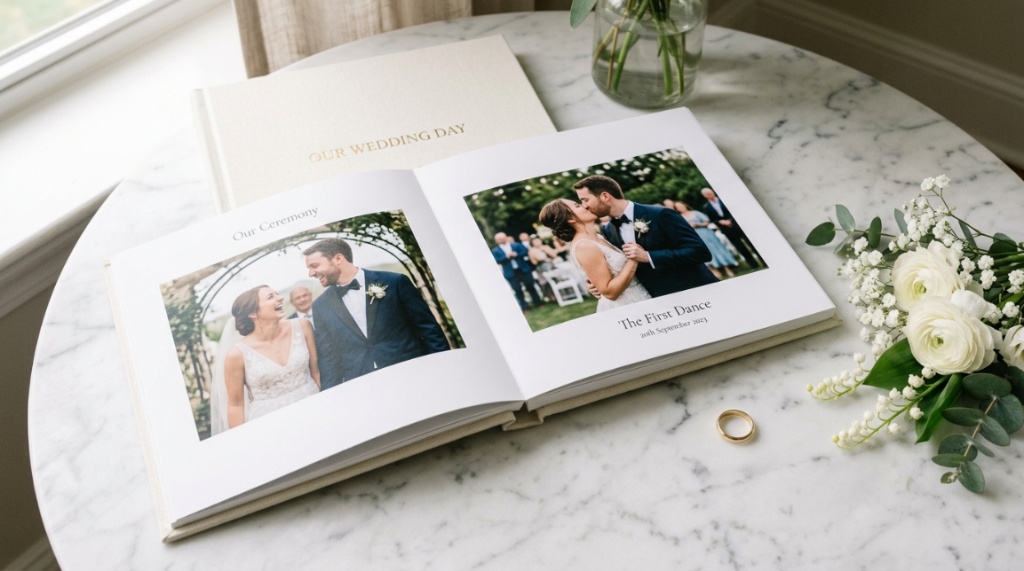
Personalization in 2026 goes beyond choosing a cover color. It involves custom typography, unique end-sheets, and the spatial flow of images. The best albums weave your story chronologically but also include sections for guest messages or small memorabilia like pressed flowers.
Choosing Between Studio Design and Custom DIY
Most professional photographers offer free design services, but you can also request the raw PDF to edit yourself. If you’re a control freak, ask for the album template to be built in Adobe InDesign. However, trust your photographer’s expertise on pacing—they know how to sequence a wedding day.
The Role of Typography and Memory Captions
Don’t just add captions because you think you should. Use short, heartfelt lines or song lyrics that evoke the emotion of the moment. In 2026, the trend is minimalist—small, elegant font types like Garamond or Montserrat rather than cursive scripts that are hard to read.
Incorporating Non-Photo Elements: Tickets, Vows, and More
Some classic memory books have sleeves for your invitation, a dried boutonniere, or the matchbook from your reception. If you want this, ensure the album has thick, pocketed pages designed to hold these 3D items without warping. Not all album machines can handle thickness variations.
How Do the Prices of Top Albums Compare?
Price tags in 2026 range from $300 for a small budget memory book to over $3,000 for a custom couture album with a leather chest and metal prints. The secret is understanding where your money goes: over 50% of the cost is labor, not materials.
Breaking Down the Cost per Page
For high-end albums, you can expect to pay $10–$15 per page. If you know your album size, simply divide the total cost by the number of pages to see if you are getting a fair rate. This simple math will save you from being massively overcharged.
The Hidden Costs: Shipping, Taxes, and Rush Fees
Always ask about shipping times from the factory (often in Italy or Turkey). If you order from a Texas-based company, ensure you’re not paying import duties or rush print fees that can add 30% to the final cost. Request a detailed invoice upfront to compare apples to apples.
When Does Price Become Worth It?
Spend more if you need a truly handmade product with unique hand-dyed fabrics or rare leathers. Skip expensive upgrades if you just want a beautiful collection of photos—a well-reviewed company using standard leather will provide the same physical protection as a couture version.
Which Vendors Stand Out in 2026?
While there are hundreds of vendors online, only a few consistently meet the high standards for durability and customer service. For example, if you are looking specifically for a trusted resource, you can find curated lists of top wedding photo albums that aggregate the best-rated services. Always check if the vendor is transparent about their manufacturing location and warranty.
Online-Only Printers vs. Local Artisans
Online services like Artifact Uprising offer convenience, while local artisans offer pre-sales meetings and physical samples. In 2026, hybrid models are winning—you can order a sample box online for a small fee, then choose a local pickup. This minimizes risk and shipping damage.
Photographer Portfolios: A Gold Mine of Info
Look at the bottom of wedding blogs—the photographer’s credit listing almost always tells you the album lab. Ask your photographer for their vendor list, as they have exclusive trade discounts. You can often save up to 20% purchasing through a studio due to their wholesale accounts.
Warranties and After-Sales Support
The best venders offer a lifetime warranty against manufacturing defects, not just a 1-year polish. Watch out for exceptions regarding water damage or pets. A solid warranty covers the binding failing and pages falling out, indicating the company trusts their build quality.
Can You Trust Customer Reviews for Wedding Albums?
Yes, but you must filter out fake or overly emotional reviews. Focus on reviews that mention the album’s physical durability after a year or more of ownership, not just the unboxing excitement. Look for patterns—if multiple reviews mention a cracked spine, believe it.
Reading Between the Lines: What Reviews Don’t Say
Reviews rarely mention color calibration issues on screens. Therefore, always request a small proof print with a test photo of your skin tone before you approve the full album. This step alone will prevent 90% of disappointments.
Case Study: What to Look for in a 3-Star Review
Ignore the 1-star reviews (often shipping issues) and focus on the middle ground. A 3-star review that says “great paper, but the layout was too cramped” highlights a design issue you can address in your planning call. Use specific feedback to your advantage.
Red Flags in Testimonials
Be wary of reviews that use overly generic words like “amazing” or “stunning” without specifics. Also, verify if the review mentions the date of manufacturing—you want recent feedback on current production runs, not systems from five years ago.
When Is the Best Time to Order Your Album?
You should begin the album design process within a month after your wedding, but consider ordering during the off-season (January–March) if you want a discount. The production timeline is usually 4 to 6 weeks, but custom projects can take up to 3 months. Plan backwards from your first anniversary to ensure it arrives on time.
Seasonal Sales and Promo Cycles
Major labs offer Black Friday discounts in November and Valentine’s Day promos in February. You can often get a free upgrade to a larger cover size during these periods. Don’t rush—an additional 10% discount is worth a two-week wait.
How to Handle Rush Orders Safely
If you need the album for a specific event, a rush fee is typically 20-30% of the total cost. Never rush a flush-mount album, as the adhesives need time to cure. If you are in a rush, order a small 30-page memory book instead, which is easier to produce quickly.
Planning for Album Reveal Events
Many couples now host an “album reveal” party or brunch. If you’re planning this, ask the photographer to keep a high-resolution file so you can show a slideshow while the physical book is passed around. It doubles the wow factor.
Should You Choose Digital Albums Over Physical?
No. While digital albums are convenient, a physical album remains the only guaranteed way to preserve photos without data loss, cloud failures, or obsolescence of file formats. In 2026, studies show that physical albums are viewed more frequently and treasured more by future generations than digital galleries.
The Archival Risks of Digital Storage
Hard drives crash, and clouds get hacked or shut down. If you only have a digital album, you are betting your memories on the lifespan of a tech company—a risk not worth taking when a physical album provides 200 years of durability.
Blending the Best of Both Worlds
Choose a physical album, then scan the printed pages at high resolution to create a back-up PDF. If the physical copy ever gets damaged in a flood or fire, you have the backup. This is the prudent, professional approach used by historians.
Interactive Smart Albums
The new “smart albums” in 2026 use a special app that overlays video content onto printed pages when you hover your phone over them. This is a beautiful compromise for a tech-savvy couple, but ask if the app is OS-agnostic and if the software is maintained.
How to Check the Caliber of Binding and Cover Materials
Request a physical sample with your specific cover option. You should be able to bend the cover 90 degrees without it cracking. Real leather will have a natural grain and smell earthy, while vegan polyurethane will have a chemical smell. Also, ensure the engraved text on the cover is debossed (pressed in), not just printed on a plate.
The Stitching Test
Flip to the inside spine and look for a visible thread. The stitches should be tight and uniform, with no loose ends. If the album is glued (perfect binding), put it on a flat surface and open it to the middle—if the pages lift or crack, it’s low quality.
Protective Slipcases
Insist on a custom slipcase to store the album. Not only does a hard case shield the cover from dust and scratches, but it also prevents the leather from drying out. In 2026, some vendors include a micro-touch hand cover for handling which is a bonus.
Testing for Lightfastness
Place a photo sample behind a window for one month. If the colors don’t fade, the album passes the test. Most top-tier albums use 168-gauge UV lamination to protect against light damage, which is a spec worth asking for.
Frequently Asked Questions
Are more expensive albums always better quality?
Not always. The price often reflects branding and custom labor rather than material superiority. However, for albums under $300, the build quality is generally lower. The sweet spot for high-quality materials is usually between $600 and $1,200.
How many pages should a wedding album have?
A typical wedding album should have 30 to 50 pages. Anything less feels too sparse, more than 60 pages can be difficult to bind properly and may reduce seam integrity. Focus on 2–3 photos per page to tell the story clearly.
What is the difference between a memory book and a photo album?
A photo album uses protective sleeves or mounts where you slip pictures in and out. A memory book is bound with printed pages and often includes captions, ephemera, and decorative design. For wedding preservation, a printed memory book is more archival.
Can I order extra copies of the album?
Yes, but it’s usually cheaper to print small family books at a lower quality. If you want the exact same high quality, you might get a 10–15% discount on multi-unit orders with the same lab. Ask for the reorder price before you finalize your initial order.
How long does a wedding album actually last?
If produced with archival materials and kept away from direct sunlight, a top-quality album can last 200 years or more. The binding is typically the first point of failure, so a sewn structure is critical for longevity. Proper care is essential.
Should I design the album myself?
Only if you have graphic design experience. Professional designers know how to crop for the binding curve, balance skin tones, and sequence for emotion. Most photographers include two design revisions in the package; use them to make minor changes only.
Conclusion
Choosing the right wedding album doesn’t have to be overwhelming if you focus on materials, binding integrity, and personal value. Ignore the hype and pay close attention to paper weight, the way the spine bends, and the quality of the inks. Remember to order samples, understand the true cost per page, and always secure a physical keepsake that can’t be lost to a hard drive crash.
Your wedding album is an investment in your family’s legacy, so prioritize craftsmanship and timeless design over fleeting trends. Now, go ahead and request those sample kits, compare your top three venues, and pick the album that makes you feel the same magic you felt on your wedding day. The memories deserve nothing less.