
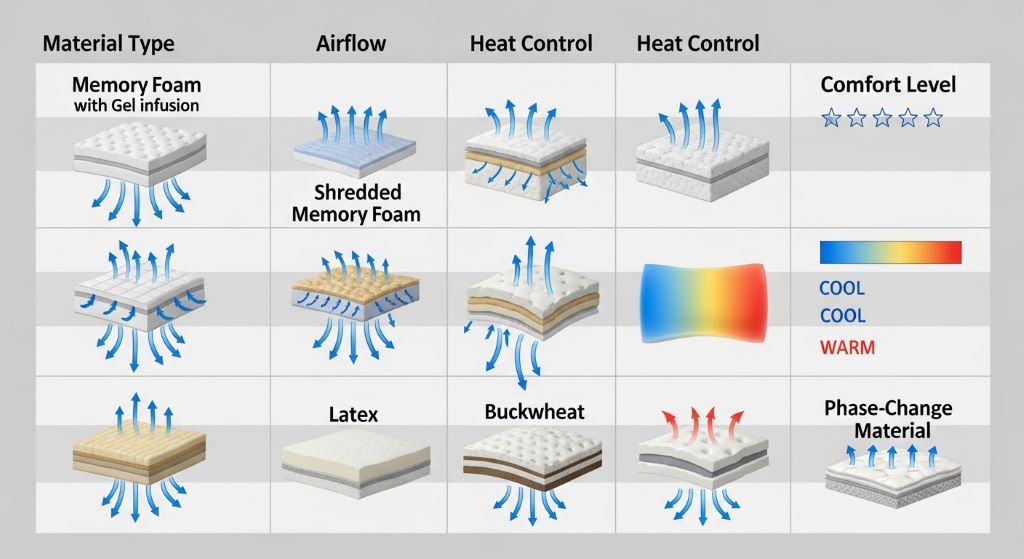
A good night’s sleep depends on comfort, support, and temperature control. Many people struggle with heat buildup during sleep, which can cause tossing and turning. That is why cooling pillows have become so popular. However, choosing the right one is not always easy. Different materials offer different benefits, and understanding them is key.
Thank you for reading this post, don't forget to subscribe!This guide will help you understand how to compare cooling pillow materials for better sleep. By the end, you will know what to look for and how to make a smart choice.
Why Cooling Pillow Materials Matter
Your pillow plays a big role in regulating body temperature. When your head gets too warm, your sleep cycle can be disrupted. As a result, you may wake up feeling tired.
Cooling pillows are designed to reduce heat buildup. They use special materials that improve airflow or absorb heat. However, not all materials perform the same way.
Therefore, understanding the differences between these materials can help you choose a pillow that suits your needs.
Key Factors to Consider Before Comparing Materials
Before diving into specific materials, it is important to understand what makes a pillow “cooling.” Several factors affect performance:
- Breathability: Allows air to flow through the pillow
- Heat absorption: Pulls heat away from your head
- Moisture-wicking: Reduces sweat buildup
- Firmness: Affects comfort and support
- Durability: Determines how long the cooling effect lasts
Additionally, your sleeping position and personal preferences also matter. For example, side sleepers often need firmer support, while back sleepers prefer medium firmness.
Memory Foam Cooling Pillows
Memory foam is one of the most common pillow materials. However, traditional memory foam tends to trap heat. To solve this problem, manufacturers have developed cooling versions.
Types of Cooling Memory Foam
- Gel-infused memory foam
- Open-cell memory foam
- Copper-infused foam
Pros
- Excellent support for neck and spine
- Adapts to your head shape
- Long-lasting durability
Cons
- Can still retain some heat
- Heavier than other materials
Best For
People who need strong support and pressure relief. However, if you sleep very hot, you may want additional cooling features.
Latex Cooling Pillows
Latex is a natural material known for its breathability. It has an open structure that allows air to circulate easily.
Types of Latex
- Natural latex
- Synthetic latex
- Blended latex
Pros
- Naturally breathable
- Resistant to dust mites and mold
- Durable and long-lasting
Cons
- Can feel firm for some users
- Higher price compared to other materials
Best For
Eco-conscious sleepers and those who prefer a cooler, more natural option.
Down and Feather Pillows
Down and feather pillows are made from bird plumage. They are soft and lightweight, which makes them comfortable.
Pros
- Soft and plush feel
- Lightweight and easy to adjust
- Good airflow
Cons
- Less support compared to foam
- May trigger allergies
- Requires regular fluffing
Best For
People who prefer a soft pillow and do not need strong support.
Polyester and Fiberfill Pillows
These pillows are made from synthetic fibers. They are widely available and affordable.
Pros
- Budget-friendly
- Lightweight
- Easy to maintain
Cons
- Less durable
- Limited cooling ability
- Can flatten over time
Best For
Short-term use or budget-conscious buyers.
Bamboo-Based Cooling Pillows
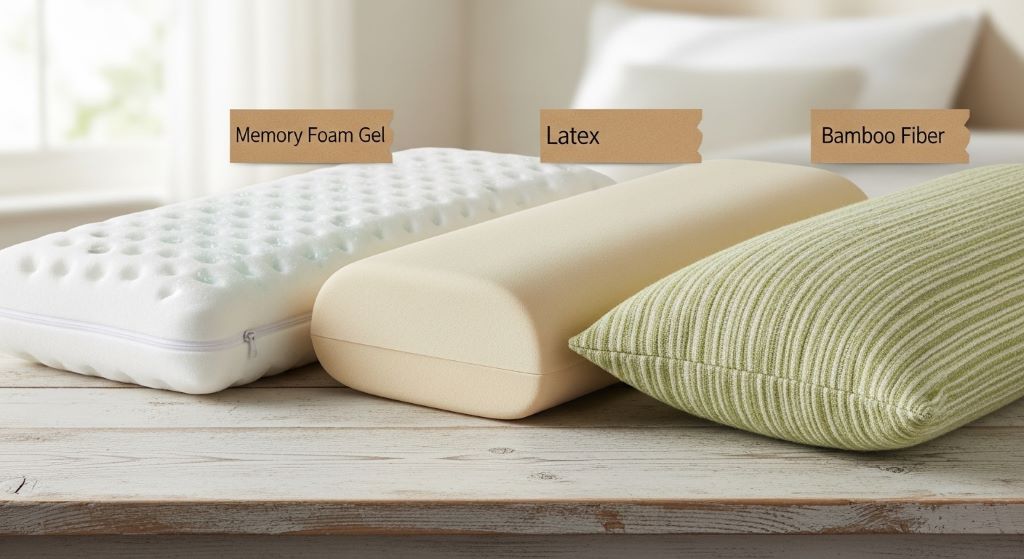
Bamboo pillows usually combine memory foam with a bamboo-derived cover. The cover helps improve breathability.
Pros
- Soft and breathable fabric
- Moisture-wicking properties
- Hypoallergenic
Cons
- Cooling depends on inner material
- Quality varies by brand
Best For
People who want a balance between comfort and cooling.
Gel Cooling Pillows
Gel is often added to pillows to improve cooling performance. It can be layered or infused into foam.
Pros
- Excellent heat dissipation
- Provides a cool-to-touch surface
- Enhances comfort
Cons
- Cooling effect may fade over time
- Can feel slightly firm
Best For
Hot sleepers who need immediate cooling relief.
Water-Based Cooling Pillows
These pillows contain a water layer that helps regulate temperature. Water absorbs heat effectively.
Pros
- Adjustable firmness
- Strong cooling performance
- Good support
Cons
- Heavier than other pillows
- Requires maintenance
Best For
People who want customizable support and cooling.
Buckwheat Pillows
Buckwheat pillows are filled with natural hulls. They allow excellent airflow.
Pros
- Very breathable
- Adjustable shape
- Long-lasting
Cons
- Can be noisy
- Heavier than most pillows
Best For
People who prefer firm support and natural materials.
Comparing Cooling Performance
When doing a cooling pillow materials comparison, it is helpful to look at how each material handles heat.
Best Cooling Materials
- Latex: Excellent airflow
- Gel-infused foam: Strong cooling effect
- Buckwheat: Natural ventilation
Moderate Cooling
- Bamboo covers: Good moisture control
- Down: Decent airflow but less heat control
Low Cooling Performance
- Standard memory foam
- Polyester fiberfill
Therefore, if you are a hot sleeper, you should focus on materials with high breathability and heat dissipation.
Comparing Comfort and Support
Cooling is important, but comfort should not be ignored.
- Memory foam: Best for support
- Latex: Balanced comfort and firmness
- Down: Soft but less supportive
- Buckwheat: Firm and adjustable
Additionally, your sleeping position matters:
- Side sleepers: Firm pillows like memory foam or latex
- Back sleepers: Medium support pillows
- Stomach sleepers: Soft and thin pillows
Durability and Maintenance
Durability affects long-term value. Some materials last longer than others.
High Durability
- Latex
- Memory foam
- Buckwheat
Medium Durability
- Gel pillows
- Bamboo pillows
Low Durability
- Polyester
- Down (requires more care)
Maintenance also varies:
- Foam pillows: Spot clean only
- Down pillows: Machine washable
- Buckwheat pillows: Replace hulls when needed
Price Comparison
Price can vary widely depending on the material.
- Budget: Polyester, basic fiberfill
- Mid-range: Memory foam, bamboo
- Premium: Latex, advanced gel pillows
However, a higher price often means better durability and cooling performance.
How to Choose the Right Cooling Pillow
Choosing the right pillow depends on your needs. Here are some simple steps:
- Identify your sleeping position
- Consider how hot you sleep
- Set a budget
- Check material benefits
- Look for durability
Additionally, reading reviews can help you understand real-world performance.
Common Mistakes to Avoid
Many people make mistakes when choosing a cooling pillow. Avoid these:
- Ignoring support needs
- Choosing based on price alone
- Overlooking material quality
- Not checking return policies
Therefore, always balance comfort, cooling, and value.
Final Thoughts on Cooling Pillow Materials
Understanding different materials helps you make a better decision. Each option has its strengths and weaknesses.
A proper cooling pillow materials comparison shows that no single material is perfect for everyone. Instead, the best choice depends on your preferences and sleep habits.
Conclusion
Choosing the right pillow can improve your sleep quality significantly. Cooling pillows are designed to reduce heat and enhance comfort. However, not all materials perform the same.
Memory foam offers strong support but may retain some heat. Latex provides excellent airflow and durability. Down pillows are soft but less supportive. Meanwhile, gel and bamboo options offer balanced cooling.
Therefore, when making a cooling pillow materials comparison, focus on breathability, support, durability, and price. By doing so, you can find a pillow that keeps you cool and comfortable all night.
FAQs
-
What is the best material for a cooling pillow?
Latex and gel-infused memory foam are among the best options due to their strong cooling performance and comfort.
-
Are cooling pillows really effective?
Yes, they can help regulate temperature and reduce sweating, especially for hot sleepers.
-
How long do cooling pillows last?
Most cooling pillows last between 2 to 5 years, depending on the material and usage.
-
Can cooling pillows help with neck pain?
Yes, if they provide proper support. Memory foam and latex are especially helpful.
-
Are bamboo pillows better than memory foam?
Bamboo covers improve breathability, but the overall performance depends on the inner material.
Related Topics:
Why the Adjustable Breastfeeding Pillow is a Game-Changer for New Moms
Black Spots on Your Pillow? Causes and How to Clean Them Safely