
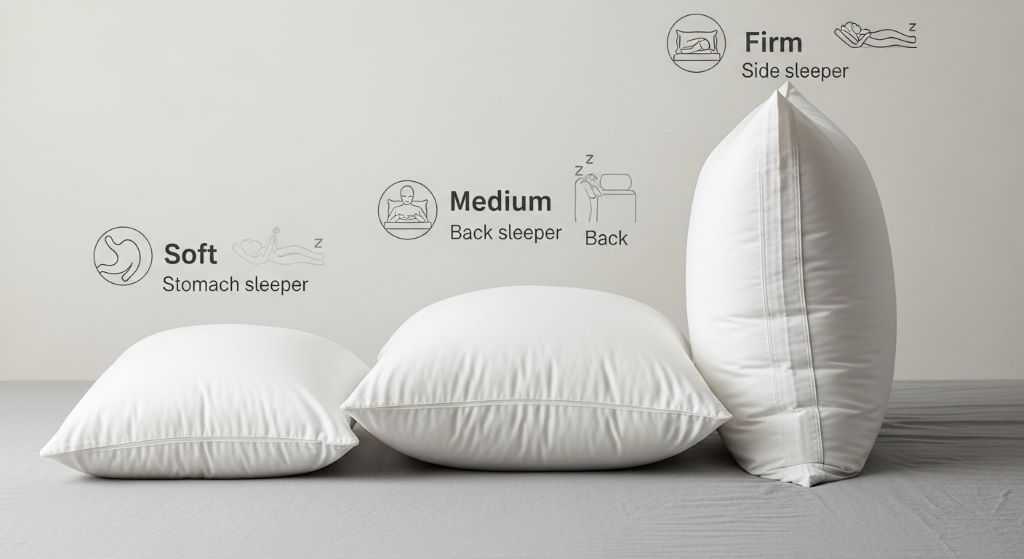
Finding the perfect pillow can transform your sleep quality and eliminate morning neck pain. Many people struggle through restless nights on pillows that don’t match their sleeping habits, never realizing that a simple change could solve their problems. The key to better sleep often lies in understanding how pillow firmness relates to your preferred sleeping position.
Thank you for reading this post, don't forget to subscribe!Your pillow does more than provide comfort. It plays a crucial role in maintaining proper spinal alignment throughout the night. When your neck and spine stay properly aligned, your muscles can relax completely, allowing for deeper, more restorative sleep. Conversely, the wrong pillow creates tension and strain that disrupts your rest.
This comprehensive guide will help you navigate the world of pillow selection. You’ll learn how different firmness levels affect your sleep, what factors to consider based on your sleeping position, and how to find the perfect match for your individual needs. By the end, you’ll have the knowledge to make an informed decision that improves your sleep quality significantly.
Understanding Pillow Firmness Levels
Pillows come in various firmness levels, typically categorized as soft, medium, firm, and extra firm. Each level serves different purposes and suits different sleepers. Understanding these categories is the first step toward finding your ideal pillow.
Soft pillows compress easily under the weight of your head. They contain less fill material or use materials that compress readily, creating a plush, cloud-like feel. These pillows cradle your head with minimal resistance and often appeal to people who enjoy sinking into their bedding.
Medium pillows offer a balance between support and comfort. They compress somewhat under pressure but maintain enough structure to keep your head elevated. This middle ground works well for many sleepers and often serves as a safe starting point when you’re unsure about your preferences.
Firm pillows resist compression and maintain their shape throughout the night. They contain dense fill materials or more substantial amounts of stuffing. These pillows keep your head elevated at a consistent height with minimal sinking.
Extra firm pillows provide maximum support with very little give. They’re designed for specific sleep positions and body types that require substantial elevation and support. These pillows may feel uncomfortable initially but provide targeted support where needed.
How Sleep Position Affects Pillow Choice
Your primary sleeping position is the most important factor in determining the right pillow firmness. Each position creates different support needs for your neck and spine. Therefore, matching your pillow to your sleep position is essential for comfort and alignment.
Side sleepers need the most support because of the space between their shoulder and head. When lying on your side, gravity pulls your head downward, creating a significant gap that needs filling. Without adequate support, your neck bends unnaturally, causing strain and discomfort.
Back sleepers require moderate support that maintains the natural curve of their neck. Too much elevation pushes the head forward, while too little allows it to fall backward. Either extreme creates poor alignment and can lead to pain and stiffness.
Stomach sleepers need minimal elevation to prevent their neck from arching backward. Sleeping face-down already places the neck in a challenging position. Adding too much height with a thick pillow exacerbates the problem and increases strain.
Combination sleepers who change positions throughout the night face unique challenges. They need a pillow that accommodates multiple positions reasonably well. This requirement often means compromising slightly on each position to find an adaptable solution.
The Soft vs Firm Pillow Debate
Choosing between soft vs firm pillow options depends on multiple factors beyond just personal preference. Your body type, sleeping position, and specific comfort needs all influence which option serves you best.
Soft pillows work well for stomach sleepers who need minimal elevation. They also suit petite individuals whose lighter body weight doesn’t require substantial support. Additionally, people who experience pressure sensitivity often find soft pillows more comfortable because they distribute pressure more evenly.
However, soft pillows may not provide adequate support for side sleepers or people with broader shoulders. They compress too much under weight, allowing the head to sink too low. This excessive compression can lead to poor alignment and morning stiffness.
Firm pillows excel at maintaining consistent support throughout the night. They’re ideal for side sleepers who need substantial elevation and for people with wider frames or heavier builds. The resistance prevents excessive sinking and keeps the spine properly aligned.
Nevertheless, firm pillows can feel uncomfortable for stomach sleepers and may create pressure points for some back sleepers. The reduced give means your head doesn’t contour into the pillow, which some people find less comfortable initially.
Understanding Pillow Height Guide Principles
Pillow height, also known as pillow loft, refers to how tall the pillow stands when not compressed. This measurement significantly impacts how well the pillow supports your neck and maintains spinal alignment. Getting the height right is just as important as selecting the proper firmness.
Low pillows measure approximately three inches or less in height. These suit stomach sleepers and people with smaller frames. The minimal elevation prevents excessive neck extension while still providing some cushioning.
Medium height pillows range from three to five inches. This versatile range works for many back sleepers and some side sleepers with average builds. The moderate elevation supports the natural cervical curve without pushing the head too far forward or allowing it to fall back.
High pillows measure five inches or more when uncompressed. Side sleepers, particularly those with broad shoulders, often need this extra height. The additional elevation fills the gap between the shoulder and head, maintaining neutral spine alignment.
Adjustable height pillows let you add or remove fill material to customize the elevation. These versatile options work well for combination sleepers or anyone unsure about their ideal height. You can experiment with different levels until you find what works best.
Exploring Pillow Loft Considerations
Pillow loft encompasses both the initial height of the pillow and how much it compresses under your head’s weight. Two pillows might start at the same height but perform differently once you lie down. Understanding how loft works helps you predict how a pillow will actually feel during use.
Compression resistance varies significantly between pillow types and materials. Memory foam typically compresses slowly and partially, maintaining much of its original loft. Down pillows compress substantially, often losing more than half their uncompressed height. Latex pillows resist compression well, similar to firmer memory foam.
Your body weight affects how much a pillow compresses. Heavier individuals will compress a given pillow more than lighter people. Therefore, a medium-height pillow might effectively become a low pillow for someone with a heavier build but remain medium for a petite person.
Temperature also influences compression in some materials. Memory foam softens in warmth, compressing more as it absorbs body heat. This characteristic means the pillow’s effective loft decreases slightly throughout the night as it warms up.
Consider testing pillows in the position you actually sleep in rather than just feeling them with your hands. A pillow that seems perfect when you squeeze it might compress too much or too little under your head’s weight during actual use.
Material Types and Their Firmness Characteristics
Different pillow materials naturally tend toward certain firmness levels. Understanding these material properties helps you narrow your search and set appropriate expectations.
Memory foam pillows range from soft to firm depending on the foam density. Higher density foam creates firmer pillows that maintain their shape better. Lower density foam feels softer and compresses more easily. Shredded memory foam offers adjustability because you can add or remove filling.
Down and feather pillows typically feel soft to medium. Pure down creates the softest pillows with the most compression. Feather content adds structure and firmness. The fill power rating indicates quality, with higher numbers meaning more loft and resilience.
Latex pillows naturally provide firm to extra firm support. The material’s inherent resilience creates consistent support throughout the night. Shredded latex offers slightly more give than solid latex while still maintaining substantial support.
Polyester fill creates the most variety in firmness levels. Manufacturers can adjust the amount and type of fiber to achieve any desired firmness. However, polyester typically compresses more over time compared to other materials, gradually losing loft.
Buckwheat pillows offer adjustable firmness based on how much hulls you include. They conform to your head’s shape while maintaining firm support. The hulls shift to accommodate your position but don’t compress like traditional pillow materials.

Matching Firmness to Specific Sleep Needs
Beyond basic sleep position, certain conditions and preferences require special consideration when selecting pillow firmness. These factors can override general recommendations and point you toward specific options.
Neck pain sufferers often benefit from medium to firm pillows that maintain consistent support. The key is finding a pillow that keeps your spine aligned without creating pressure points. Some people find that slightly firmer pillows prevent their neck from bending into painful positions during sleep.
Shoulder pain may improve with a softer, more conforming pillow that doesn’t push against the shoulder. Alternatively, a very high pillow that elevates the head well above the shoulder can relieve pressure. The right choice depends on whether the pain stems from compression or poor alignment.
Snoring and sleep apnea can sometimes be reduced by elevating the head slightly. A medium to firm pillow that maintains its height throughout the night often works better than a soft pillow that compresses. Some people benefit from combining two pillows or using a specially designed wedge.
Hot sleepers should consider how different materials retain heat. Memory foam tends to sleep warmer, while latex, buckwheat, and some specialized foams promote better airflow. The firmness level itself doesn’t affect temperature, but it often correlates with material choice, which does.
Allergy concerns might point you toward certain materials regardless of firmness preferences. Hypoallergenic options include latex, certain memory foams, and synthetic fills. These materials resist dust mites and mold better than down or traditional polyester.
Testing and Adjusting Your Pillow Selection
Finding the perfect pillow often requires some trial and error. Even with careful research, the way a pillow feels during actual sleep can surprise you. Therefore, approaching pillow shopping with a testing mindset helps you find the right match.
Sleep trials offered by many manufacturers let you test pillows at home for extended periods. A single night rarely provides enough information to judge a pillow accurately. Your body needs time to adjust to new support, typically at least a week or two.
Start by paying attention to how you feel in the morning. Morning stiffness, headaches, or numbness suggest alignment problems. Waking up frequently during the night might indicate comfort issues. However, remember that some adjustment period is normal when changing pillows.
Additionally, consider the “hand test” during shopping. Lie on your side on a mattress similar to yours. Have someone check whether your spine appears straight when viewed from behind. Your neck should continue the line of your spine without angling up or down.
The “wall test” works for assessing pillow height at home. Stand with your back against a wall in your typical sleeping posture. Notice where your head naturally positions. Your pillow should maintain this same relationship between your head and shoulders when you’re lying down.
Document your experience with different pillows. Keep notes about what works and what doesn’t. This information becomes invaluable if you need to replace your pillow in the future or help family members select theirs.
The Role of Mattress Firmness
Your mattress firmness significantly impacts your pillow needs. A pillow that works perfectly on one mattress might feel completely wrong on another. Therefore, you must consider your mattress when selecting pillow firmness and height.
Soft mattresses allow your shoulders and hips to sink deeply. This sinking reduces the gap between your shoulder and head when side sleeping, meaning you need a lower pillow than you would on a firmer mattress. Conversely, back sleeping on a soft mattress might require a slightly higher pillow to compensate for how your body sinks.
Firm mattresses keep your body more on the surface. Side sleepers on firm mattresses typically need higher pillows because their shoulders don’t sink into the surface, creating a larger gap to fill. Back sleepers might need slightly less height because their body remains more level.
Medium mattresses offer the most straightforward pillow matching because they create moderate sinking. Standard pillow height recommendations typically assume a medium-firm mattress, making it easier to find compatible pillows.
If you’ve recently changed mattresses and your pillow suddenly feels wrong, the mattress change likely altered your support needs. Don’t assume your pillow preferences are permanent. They may need adjustment when other elements of your sleep setup change.
Special Considerations for Different Body Types
Your physical characteristics influence how much support you need and how different pillows will perform for you. Taking these factors into account helps you select the most appropriate firmness level.
Broad-shouldered individuals need more height when side sleeping because of the greater distance between their shoulder and head. A pillow that works for someone with narrow shoulders will likely prove too low. Firm, high pillows typically work best for this body type.
Petite frames require less support overall. A high, firm pillow that works well for a larger person might push a small person’s neck into an unnatural angle. Lower, softer pillows often provide better alignment for petite sleepers.
Heavier builds compress pillows more than lighter weights. What feels firm to a lightweight person might compress to medium firmness for someone heavier. Consider choosing one firmness level higher than you might think you need if you have a heavier build.
Longer necks need more support to bridge the gap between the shoulder and head. Shorter necks require less elevation. This consideration applies regardless of overall body size and can significantly impact comfort.
Age-related changes affect pillow needs over time. As we age, we often become more sensitive to pressure and may prefer softer surfaces. However, we also need good support to prevent pain. Finding the right balance becomes increasingly important with age.
Maintaining Your Pillow’s Performance
Even the perfect pillow won’t stay perfect without proper care. Regular maintenance extends the life of your pillow and ensures it continues providing the support you need.
Fluffing your pillow daily helps it maintain its shape and loft. Different materials require different fluffing techniques. Down and polyester pillows benefit from vigorous shaking and kneading. Foam pillows should be gently compressed and released rather than beaten or twisted.
Regular washing according to manufacturer instructions prevents buildup of oils, sweat, and allergens. Most pillows can be washed every three to six months. Use pillow protectors between the pillow and pillowcase to reduce how often you need to wash the pillow itself.
Proper drying is crucial after washing. Insufficient drying can lead to mold and mildew, especially in down and polyester pillows. Add dryer balls or clean tennis balls to help fluff the pillow while drying and prevent clumping.
Replace your pillow when it no longer springs back to shape, develops lumps, or causes discomfort despite previously working well. Most pillows need replacement every one to three years, depending on the material and quality. High-quality latex and memory foam may last longer.
Store extra pillows in breathable bags or containers. Plastic bags trap moisture and can lead to mold growth. Proper storage preserves the pillow’s properties until you need it.
Conclusion
Choosing the right pillow firmness requires understanding how your sleep position, body type, and personal preferences interact with different pillow characteristics. The soft vs firm pillow decision isn’t one-size-fits-all. Instead, it depends on whether you sleep on your side, back, or stomach, as well as your physical build and any specific pain or comfort issues.
The pillow height guide principles show that proper elevation is just as important as firmness in maintaining good spinal alignment. Understanding pillow loft helps you predict how a pillow will actually perform under your head’s weight, not just how it feels when you touch it in a store.
Material choice influences both firmness and other important factors like temperature regulation and durability. Testing pillows thoroughly before committing, ideally with a sleep trial period, gives you the best chance of finding a perfect match. Remember that your needs may change over time as your body changes or if you switch to a different mattress.
Investing time in finding the right pillow pays dividends in better sleep quality, reduced pain, and improved overall health. Your pillow is one of the most important sleep tools you own, and selecting the right firmness level is key to maximizing its benefits.
Frequently Asked Questions
How do I know if my pillow is too soft or too firm?
If you wake up with neck pain, headaches, or numbness in your arms, your pillow firmness might be wrong. A pillow that’s too soft will allow your head to sink too low, causing your neck to bend excessively. A pillow that’s too firm will keep your head elevated too high, creating tension. Additionally, if you find yourself bunching up your pillow, folding it, or placing your arm underneath it, these behaviors suggest the pillow isn’t providing adequate support.
Can I adjust the firmness of my existing pillow?
For some pillow types, yes. Pillows with removable fill, such as shredded memory foam or buckwheat, allow you to remove or add material to adjust firmness and height. Down pillows can sometimes be fluffed to increase loft or compressed to decrease it, though this doesn’t change the actual firmness. For solid foam pillows, you typically cannot adjust firmness. However, you can try adding a pillow topper or using a thinner pillowcase to slightly alter the feel.
How often should I replace my pillow?
Most pillows should be replaced every one to three years. Memory foam and latex pillows at the higher quality end may last up to five years with proper care. Signs you need a new pillow include permanent lumps, lack of support, visible staining despite washing, or waking up with more neck pain than before. A simple fold test can help: fold your pillow in half, and if it doesn’t spring back to its original shape, it’s time for replacement.
Should I use the same firmness pillow for side and back sleeping?
Ideally, no. Side sleeping requires more height and often more firmness than back sleeping because of the larger gap between your shoulder and head. If you’re a combination sleeper who switches positions, look for a medium-height, medium-firm pillow that compromises between the needs of different positions. Alternatively, consider keeping two different pillows and switching based on how you plan to sleep, though this isn’t practical for most people.
Does pillow firmness affect sleep temperature?
Firmness itself doesn’t directly affect temperature, but the materials that create different firmness levels do influence heat retention. Memory foam, which is often used in firm pillows, tends to sleep warmer because it contours closely to your head and restricts airflow. Latex and buckwheat pillows, which also provide firm support, typically sleep cooler due to better air circulation. Soft down pillows can trap heat if they surround your head, while shredded materials generally sleep cooler than solid alternatives.
Related Topics:
Sanitizing Your Pillows: Natural Methods That Really Work
Pillows for Stomach Sleepers with Back Pain: Finding the Right Support