
Most golfers blame their swing when the real problem is hiding in a 1.68-inch sphere. The truth is, many mid handicappers lose greenside control because they’re playing the wrong ball. The best soft golf balls for mid handicappers combine low compression golf balls technology with a soft feel that improves short-game precision, reduces harsh impact, and helps players maintain distance without sacrificing accuracy.
Thank you for reading this post, don't forget to subscribe!Best Soft Golf Balls for Mid Handicappers Who Want More Control
What Are the Best Soft Golf Balls for Mid Handicappers?
The best soft golf balls for mid handicappers are low-compression models designed to deliver softer feel, better greenside spin, straighter flight, and improved control without demanding tour-level swing speed.
Mid handicappers often sit in the performance gap between beginner and advanced golfer. They want more consistency, but they also need forgiveness. That’s exactly where soft feel balls excel.
Unlike high-compression tour balls that require fast swing speeds to activate maximum performance, low compression golf balls compress more easily at impact. This creates:
- Softer feel off the clubface
- Lower vibration on mishits
- Better short-game touch
- Straighter ball flight for moderate swing speeds
- More confidence around the greens
Golf ball manufacturers like Titleist, Callaway, TaylorMade, Srixon, and Bridgestone now design soft feel balls specifically for average golfers seeking balanced performance.
Why Do Mid Handicappers Benefit From Soft Golf Balls?
Mid handicappers benefit from soft golf balls because they typically generate moderate swing speeds and need extra control, forgiveness, and feel during approach shots and putting.
According to data from golf equipment studies and launch monitor testing, the average amateur golfer swings the driver between 85–97 mph. Many tour-level balls are optimized for speeds above 105 mph. That mismatch often causes:
- Reduced compression efficiency
- Lower ball speed
- Harsh impact feel
- Inconsistent spin rates
- Poor distance optimization
Soft golf balls solve this by compressing more efficiently at moderate speeds.
What Swing Speed Works Best With Low Compression Golf Balls?
Golfers with swing speeds between 80–100 mph usually benefit most from low compression golf balls.
Compression ratings generally work like this:
| Compression Rating | Player Type | Typical Swing Speed |
|---|---|---|
| 40–60 | Slow swing speed players | Below 85 mph |
| 60–80 | Mid handicappers | 85–100 mph |
| 90+ | Advanced/Tour players | 100+ mph |
That’s why many mid handicappers see immediate improvements after switching to softer compression models.
Which Soft Feel Golf Balls Offer the Best Control?
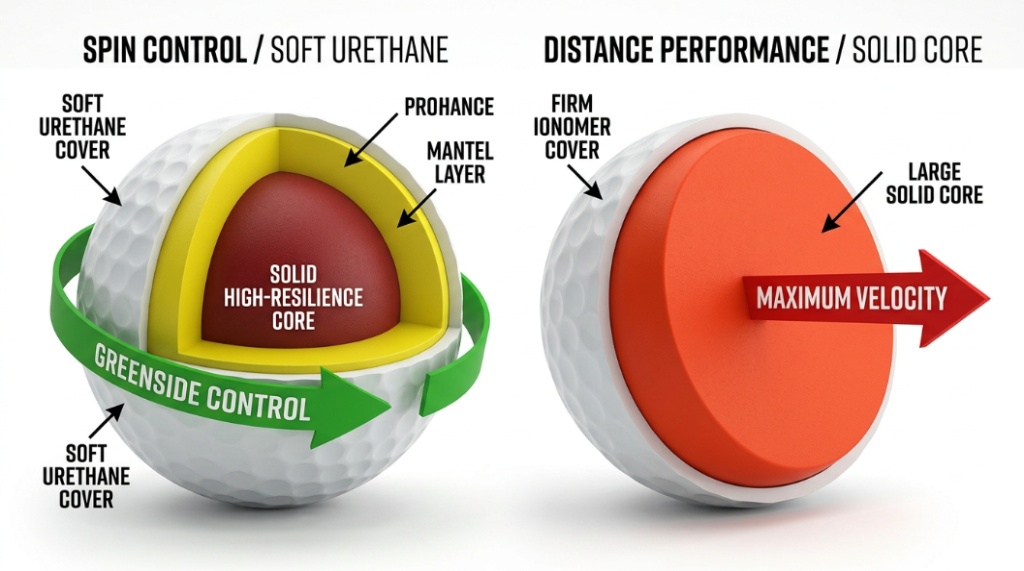
The best soft feel golf balls for control combine urethane or advanced ionomer covers with low-compression cores to enhance spin consistency and greenside precision.
1. Titleist AVX
The Titleist AVX is ideal for golfers who want premium feel with lower spin off the driver and excellent greenside touch.
- Low flight profile
- Soft urethane cover
- Excellent wedge control
- Premium short-game performance
It works especially well for mid handicappers struggling with excessive driver spin.
2. Callaway Chrome Soft
The Callaway Chrome Soft delivers one of the softest feels in golf while maintaining tour-level control.
- Dual SoftFast Core
- Reliable spin around greens
- Balanced distance and feel
- Very forgiving on mishits
This is one of the most popular soft feel balls among amateur players.
3. Srixon Soft Feel
The Srixon Soft Feel is a budget-friendly option that provides impressive softness and straight flight.
- Low compression core
- High launch characteristics
- Affordable pricing
- Reliable carry distance
It’s especially useful for players transitioning from beginner-level balls.
4. TaylorMade Tour Response
The TaylorMade Tour Response offers urethane-level spin without premium tour-ball pricing.
- Soft cast urethane cover
- Strong greenside control
- Mid-launch flight
- Excellent iron shot stopping power
5. Bridgestone e6
The Bridgestone e6 prioritizes straight flight and soft feel for average golfers.
- Low driver spin
- Extremely soft impact feel
- Forgiving ball flight
- Good putting response
How Does Golf Ball Compression Affect Control?
Golf ball compression affects how the ball reacts at impact, influencing feel, spin, launch angle, and shot consistency.
Compression measures how much a golf ball deforms during impact. Softer balls compress more easily, especially for moderate swing speeds.
Why Does Lower Compression Feel Softer?
Lower compression cores absorb impact energy more efficiently, reducing vibration and producing a softer sensation at contact.
This matters because feel influences confidence. Mid handicappers often struggle with inconsistent strikes, so a softer response helps improve feedback and rhythm.
Benefits include:
- Smoother putting feel
- More confidence on chip shots
- Reduced harshness on off-center hits
- Improved touch around greens
Do Soft Golf Balls Reduce Distance?
No. Modern low compression golf balls can still produce strong distance performance thanks to advanced multilayer construction.
Older soft balls sacrificed speed for feel. Today’s technology changes that.
Manufacturers now combine:
- Fast-reacting cores
- Aerodynamic dimple patterns
- Multi-layer energy transfer systems
- Thin cover technology
This allows golfers to gain both control and respectable distance.
Are Urethane Covers Better for Mid Handicappers?
Yes, urethane-covered soft golf balls typically provide better greenside spin and shot-stopping control for mid handicappers.
Golf ball covers strongly affect short-game performance.
| Cover Type | Benefits | Best For |
|---|---|---|
| Ionomer | Durability and lower cost | Casual golfers |
| Urethane | Higher spin and softer feel | Control-focused players |
Urethane covers grip wedge grooves more effectively, generating:
- More spin on chips
- Faster stopping power
- Improved bunker control
- Better shot shaping ability
For mid handicappers trying to lower scores, this added control can directly improve scoring opportunities.
What Are the Best Budget Soft Feel Balls?
The best budget soft feel balls combine forgiveness, softness, and durability without premium pricing.
Top Affordable Options
| Golf Ball | Key Strength | Best Feature |
|---|---|---|
| Srixon Soft Feel | Soft impact | Value for money |
| Wilson Duo Soft | Ultra-low compression | Very soft feel |
| Bridgestone e6 | Straight flight | Forgiveness |
| Callaway Supersoft | Easy launch | Distance + feel |
Is the Callaway Supersoft Good for Mid Handicappers?
Yes, the Callaway Supersoft is one of the best entry-level soft feel balls for mid handicappers seeking easy launch and straighter shots.
It’s particularly effective for golfers who struggle with slices or inconsistent contact.
How Do Soft Feel Balls Improve the Short Game?
Soft feel balls improve the short game by increasing friction with wedges and enhancing touch during chips, pitches, and putts.
Most scoring opportunities happen inside 100 yards. That’s where feel matters most.
What Makes Putting Better With Soft Golf Balls?
Soft golf balls create quieter impact acoustics and smoother face interaction, helping golfers judge pace more consistently.
Many players describe the sensation as:
- Less “clicky”
- More responsive
- Easier to control speed
- Better distance feedback
This is especially useful on fast greens where touch becomes critical.
Do Soft Balls Spin More Around the Greens?
Yes, many soft golf balls produce higher greenside spin, especially those with urethane covers.
Higher spin allows golfers to:
- Stop approach shots faster
- Control rollout distance
- Hit softer landing chips
- Create more consistent pitch shots
That control can save multiple strokes per round.
What Mistakes Should Mid Handicappers Avoid When Choosing Golf Balls?
Mid handicappers should avoid choosing golf balls based only on tour popularity or maximum distance claims.
Common Golf Ball Selection Mistakes
- Using high-compression tour balls without enough swing speed
- Ignoring short-game feel
- Switching golf balls every round
- Choosing price over performance fit
- Overvaluing driver distance
Consistency matters more than marketing claims.
Should Mid Handicappers Play the Same Ball Every Round?
Yes, playing the same golf ball consistently improves distance control, feel familiarity, and shot predictability.
Changing golf balls frequently alters:
- Spin rates
- Launch conditions
- Putting feel
- Wedge response
Using one model consistently builds confidence and performance memory.
Which Golf Ball Is Best for Mid Handicappers With Slices?
Golfers who struggle with slices should choose low-spin soft golf balls that reduce side spin and encourage straighter flight.
Best Options for Slice Reduction
- Bridgestone e6
- Callaway Supersoft
- Wilson Duo Soft
- TaylorMade Distance+
These balls reduce excessive driver spin, helping shots curve less offline.
Can Mid Handicappers Use Tour Golf Balls?
Yes, but only if their swing speed and short-game skill justify the added spin and compression.
Some mid handicappers benefit from tour balls like:
- Titleist Pro V1
- TaylorMade TP5
- Callaway Chrome Tour
However, many average golfers lose distance and forgiveness with overly firm models.
For most players in the 10–20 handicap range, softer compression balls provide better total performance.

How Often Should Golfers Replace Golf Balls?
Golf balls should be replaced when cover damage, scuffs, or loss of surface integrity begins affecting flight and spin consistency.
Signs it’s time to replace a ball:
- Visible cuts or cracks
- Scraped cover texture
- Uneven paint wear
- Reduced greenside control
Even premium soft feel balls lose performance after repeated cart path impacts or wedge scuffs.
Conclusion: Are Soft Golf Balls Worth It for Mid Handicappers?
Yes. Soft golf balls are one of the smartest equipment upgrades mid handicappers can make if they want more control, better feel, and improved scoring consistency.
The right low compression golf balls can help average golfers:
- Improve greenside touch
- Reduce harsh impact feel
- Maintain better shot consistency
- Gain confidence on approach shots
- Control putting speed more effectively
Players don’t need tour-level swing speed to benefit from advanced golf ball technology. In many cases, softer compression models outperform premium tour balls for amateur golfers.
If your current ball feels hard, inconsistent, or difficult to control around the greens, switching to a softer model could immediately improve your game. Test a few options over multiple rounds, pay attention to short-game feel, and stick with the ball that gives you the most confidence under pressure.
Frequently Asked Questions About Soft Golf Balls
What compression is best for mid handicappers?
Most mid handicappers perform best with golf ball compression ratings between 60 and 80 because these provide balanced distance, feel, and control.
Are low compression golf balls better for slower swing speeds?
Yes. Low compression golf balls compress more easily at impact, helping slower and moderate swing speed players maximize energy transfer and feel.
Do soft feel balls spin less off the driver?
Many soft feel balls are designed to reduce driver spin, which helps golfers hit straighter shots and minimize slices.
What is the softest golf ball available?
The Wilson Duo Soft is widely considered one of the softest golf balls because of its extremely low compression rating.
Can soft golf balls still provide distance?
Yes. Modern soft golf balls use advanced core and aerodynamic technology to maintain strong carry distance while improving feel and control.
Should beginners use soft golf balls?
Yes. Soft golf balls are often easier for beginners to launch and control, especially players with slower swing speeds.
Do professional golfers use soft golf balls?
Many professionals use softer-feeling tour balls with urethane covers, but their compression levels are usually higher than standard amateur soft balls.
📌 Related Reads
Discover: List of Shopping Discounts in New York City, NYC, in June 2026
Learn: What Sort of Person Makes a Good Builders Merchant Assistant?