

After a long surf session, the last thing you want is a cold, damp change on the beach. A good surf poncho solves that problem. It keeps you warm, gives you privacy, and helps you dry off fast. However, not all ponchos are created equal. The material makes all the difference. Choosing the right fabric means the difference between a poncho that lasts years and one that falls apart after a season. This guide walks you through everything you need to know so you can make a smart, informed choice.
Thank you for reading this post, don't forget to subscribe!Why Material Matters More Than You Think
Most people pick a poncho based on looks or price. That is a mistake. The material affects how fast you dry, how warm you stay, and how long the poncho holds up. A poorly chosen fabric can leave you shivering on a cold morning or struggling with a heavy, soaking garment after every swim.
Therefore, before you spend your money, it pays to understand what different fabrics offer. The two most popular choices are cotton and microfiber. Each has real strengths and real weaknesses. Knowing the difference helps you match the poncho to your lifestyle and surf conditions.
Cotton Surf Ponchos: The Classic Choice
Cotton has been used in towels and beachwear for centuries. There is a good reason for that. It is soft, natural, and comfortable against the skin. Many surfers love the feel of cotton because it is gentle, even after rough saltwater sessions.
Cotton is also highly absorbent. A thick cotton poncho soaks up water quickly, which is exactly what you need after coming out of the ocean. Additionally, cotton is easy to wash and holds up well to repeated machine washing without losing its texture.
However, cotton does have drawbacks. It is heavy, especially when wet. Carrying a soaking cotton poncho to your car or across a long beach can feel like carrying a small anchor. It also takes a long time to dry. If you surf in the morning and need the poncho again in the afternoon, cotton may still be damp. In cold or windy conditions, a wet cotton poncho can actually make you feel colder rather than warmer.
Cotton ponchos also tend to be bulkier. They do not pack down small, so they take up more space in your bag. For surfers who travel often or prefer lightweight gear, this can be a real inconvenience.
Microfiber Surf Ponchos: The Modern Alternative
Microfiber is a synthetic fabric made from very fine polyester or nylon fibres. It has become incredibly popular in recent years, and for good reason. Microfiber is light, fast-drying, and surprisingly soft.
One of the biggest advantages of microfiber is how quickly it dries. After a surf session, you can wring it out and it will be nearly dry within an hour. This makes it ideal for surfers who hit the water multiple times a day or travel between breaks. Additionally, microfiber packs down very small. You can roll it into a compact bundle and slip it into any bag without hassle.
Microfiber is also durable when cared for properly. It resists mould and mildew better than cotton because it dries so fast. For surfers in humid climates, this is a significant benefit. A microfiber poncho stored slightly damp will not develop that musty smell that plagues cotton gear left in a bag too long.
However, microfiber is not perfect. Some people find that it does not feel as luxurious or natural as cotton. It can also generate static and occasionally pill after many washes if low-quality. Furthermore, microfiber does not retain warmth as effectively as a thick cotton terry fabric, which can be a disadvantage in cold surf environments.
Cotton vs Microfiber: A Side-by-Side Look
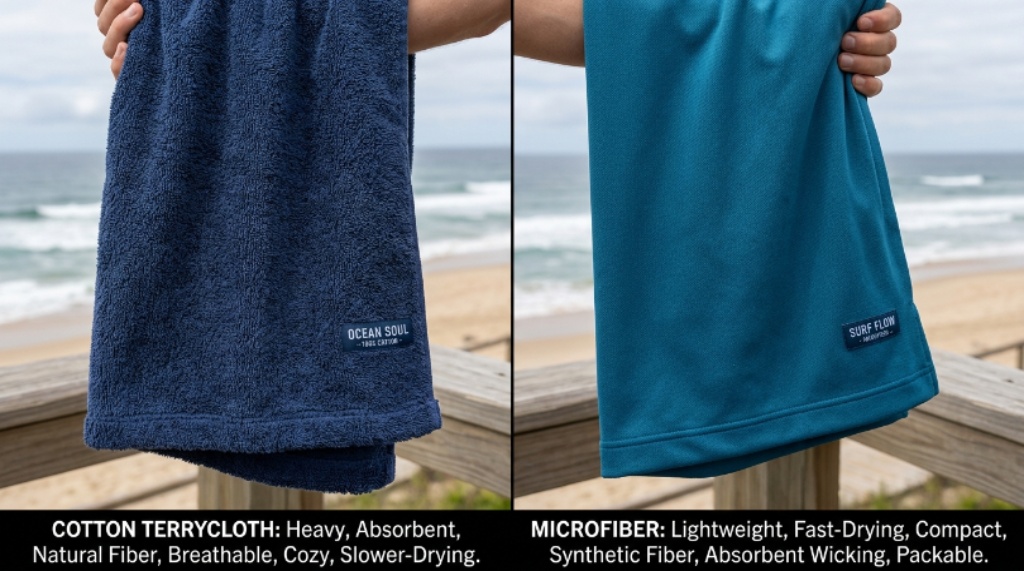
When weighing up cotton vs microfiber for a surf poncho, it helps to think about your specific needs.
If you surf in cold water and prioritise warmth and a plush feel, cotton is likely your best match. It wraps you in familiar comfort and provides excellent coverage. On the other hand, if you travel frequently, surf in warmer conditions, or simply want something easy to carry and quick to dry, microfiber is the smarter pick.
Here is a simple breakdown to guide your decision:
- Warmth: Cotton wins, especially in cold climates
- Drying speed: Microfiber dries significantly faster
- Weight: Microfiber is much lighter, especially when wet
- Packability: Microfiber compresses into a much smaller size
- Softness: Cotton feels more natural; microfiber can feel slightly synthetic
- Durability: Both last well with proper care, though microfiber resists mildew better
- Price: Cotton ponchos are often cheaper; premium microfiber can cost more
The Role of Absorbency in Your Decision
Absorbency is one of the most important factors when choosing a surf poncho. After all, the whole point is to dry off. Both fabrics offer strong absorbent towel-like performance, but they work differently.
Cotton absorbs water and holds it inside the fibres. This is great for drying your body quickly because the fabric pulls moisture away from your skin. The trade-off is that the poncho itself stays wet for a long time.
Microfiber, by contrast, absorbs water and then releases it quickly through evaporation. This means it dries your body well and also recovers its drying ability faster. For surfers who need a poncho that is ready to use again within a short time, microfiber clearly has the edge.
Therefore, if you are comparing the two purely on absorbency performance across a full surf day, microfiber offers a more practical result overall.
Thickness and Gsm: What the Numbers Mean
You may see fabric weight listed in GSM, which stands for grams per square metre. This number tells you how dense and heavy the fabric is. A higher GSM means a thicker, heavier, more absorbent fabric.
For cotton ponchos, a GSM of 400 to 600 is considered good quality. Anything below 300 will feel thin and may not absorb well. For microfiber, a GSM of 200 to 350 is generally ideal. Microfiber is so efficient that you do not need as much weight to get great performance.
When shopping, always check the GSM if it is listed. It gives you a reliable way to compare options beyond just the price tag.
Other Fabric Options Worth Knowing
While the cotton vs microfiber debate dominates the market, a few other options are worth a mention.
Bamboo fabric blends are growing in popularity. Bamboo is naturally soft, antibacterial, and more eco-friendly than synthetic microfiber. However, bamboo ponchos can be harder to find and tend to cost more.
Fleece is another option, particularly for cold-water surfers. Fleece lined ponchos offer excellent warmth and are fast-drying. They are heavier than microfiber but lighter than thick cotton.
Some brands combine fabrics, offering a cotton exterior for absorbency with a fleece lining for warmth. These hybrid designs can offer the best of both worlds, though they come at a higher price.
How to Care for Your Surf Poncho
Proper care extends the life of any poncho, regardless of material. A few simple habits make a big difference.
Always rinse your poncho in fresh water after every surf session. Salt and sand break down fibres over time. For cotton, wash in cold or warm water and avoid high heat in the dryer, as this can cause shrinkage. For microfiber, avoid fabric softeners entirely. Softeners coat the fibres and reduce their ability to absorb water. Wash microfiber in cool water and air dry when possible.
Store your poncho dry and loose. Never leave a damp poncho rolled up in a bag for days. This leads to mildew in cotton and unpleasant odours in any fabric.
Conclusion
Choosing the best surf poncho material comes down to understanding your needs. Cotton offers warmth, natural softness, and excellent absorbency, making it a great choice for cold-water surfers who prioritise comfort. Microfiber, however, delivers speed, lightness, and packability that makes it the top pick for travelling surfers and those in warmer climates.
Consider where and how often you surf, what conditions you face, and how much weight you want to carry. Think about drying time and how important warmth is to you. There is no single right answer. The best poncho is the one that fits your surfing life. Use the fabric comparison points in this guide to make a confident choice that keeps you warm, dry, and comfortable for many seasons to come.
Frequently Asked Questions
Is cotton or microfiber better for a surf poncho?
It depends on your needs. Cotton is warmer and softer, while microfiber dries faster and is lighter. Cold-water surfers often prefer cotton; warm-weather or travelling surfers tend to prefer microfiber.
How do I stop my surf poncho from smelling?
Rinse it in fresh water after every use and allow it to fully dry before storing. Never leave it damp in a bag. For cotton, wash regularly. For microfiber, avoid fabric softeners and wash in cool water.
What GSM should a good surf poncho have?
For cotton, look for 400 to 600 GSM. For microfiber, 200 to 350 GSM is usually sufficient for strong absorbency and fast drying.
Can I put my surf poncho in the dryer?
Cotton can handle low to medium dryer heat, but high heat causes shrinkage. Microfiber should be air-dried when possible, as high heat can damage the fine fibres and reduce performance.
Are bamboo surf ponchos worth buying?
Bamboo is a good eco-friendly option that is soft and naturally antibacterial. However, it is less widely available and usually more expensive. It works well for surfers who prioritise sustainability.
Related Topics:
How to Pick Luxury Beach Bags That Combine Style and Function
How to Use Polarized Fishing Sunglasses for Better Visibility on Water