
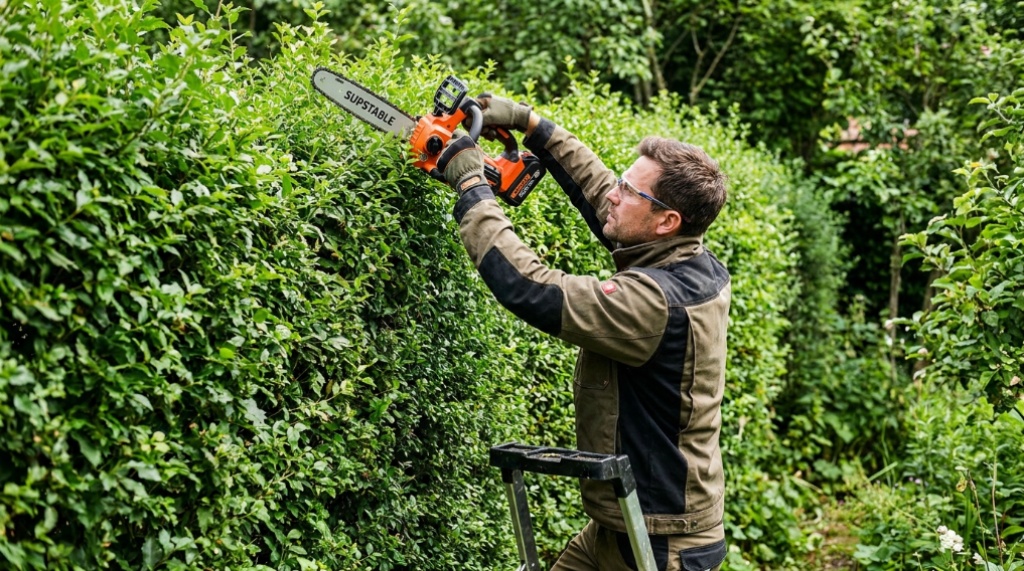
Trimming branches with a full-size gas chainsaw is often more work than the job itself—pulling a starter cord, managing exhaust fumes, and balancing several kilograms of equipment above your head. A cordless mini chainsaw brushless motor design changes that equation by shrinking the tool while keeping enough cutting power for limbs and overgrowth. The Supstable mini chainsaw leans into this approach, and the reasons below explain where it genuinely performs well, where it has limits, and how to decide whether it fits your trimming tasks.
Thank you for reading this post, don't forget to subscribe!Key Takeaways
- A brushless motor delivers more torque per battery charge and less wear than a brushed motor, which matters most when cutting through green wood repeatedly.
- Supstable’s low weight and one-hand format give it an edge on overhead and awkward cuts, but it is not a replacement for a full-size saw on trunks or thick hardwood.
- Battery voltage, chain speed, and bar length determine what the saw can realistically cut—match these to your branch diameter, not to marketing claims.
- Correct tensioning, sharpening, and bar-oil checks have a bigger effect on cutting performance than most spec differences between models.
What a Brushless Motor Actually Changes in a Mini Chainsaw
A brushless motor removes the carbon brushes that physically contact the spinning rotor in a conventional motor. Instead, electronic controls switch the current, which reduces friction and heat. In practical terms, that translates to longer runtime per charge, more consistent torque under load, and fewer parts that wear out over time.
For branch trimming specifically, torque consistency matters more than peak speed. When a chain bites into green wood, resistance spikes. A brushed motor tends to bog down and draw heavy current; a brushless design holds its speed better and pulls less current doing the same work. That is why a cordless mini chainsaw brushless motor setup often outlasts a cheaper brushed equivalent on the same battery, even when the two look nearly identical on the box.
The trade-off is cost. Brushless tools generally carry a higher upfront price, and if the electronics fail out of warranty, repair can be uneconomical. For occasional light pruning, a brushed saw may be adequate. For repeated trimming sessions, the brushless premium usually pays for itself in runtime and longevity.
Reason 1: Low Weight Makes Overhead Cuts Safer and Easier
Reaching up to cut a branch is one of the most fatiguing and least stable positions in chainsaw work. Every kilogram counts when your arms are extended. A mini chainsaw typically weighs a fraction of a gas or full-size electric saw, which reduces the strain that leads to sloppy cuts and loss of control.
Less weight also means faster recovery between cuts. If you are clearing several limbs from a tree or hedge line, the accumulated fatigue from a heavier saw shows up in the last few cuts—exactly when accuracy matters most. A lighter tool keeps your form consistent from the first branch to the last.
One caution: lighter does not mean you can skip basic safety. A mini chainsaw can still cause serious injury. Keep both hands on the tool where the design allows, never cut directly above your face, and let the chain reach full speed before contacting wood.
Reason 2: One-Handed Control in Tight Spaces
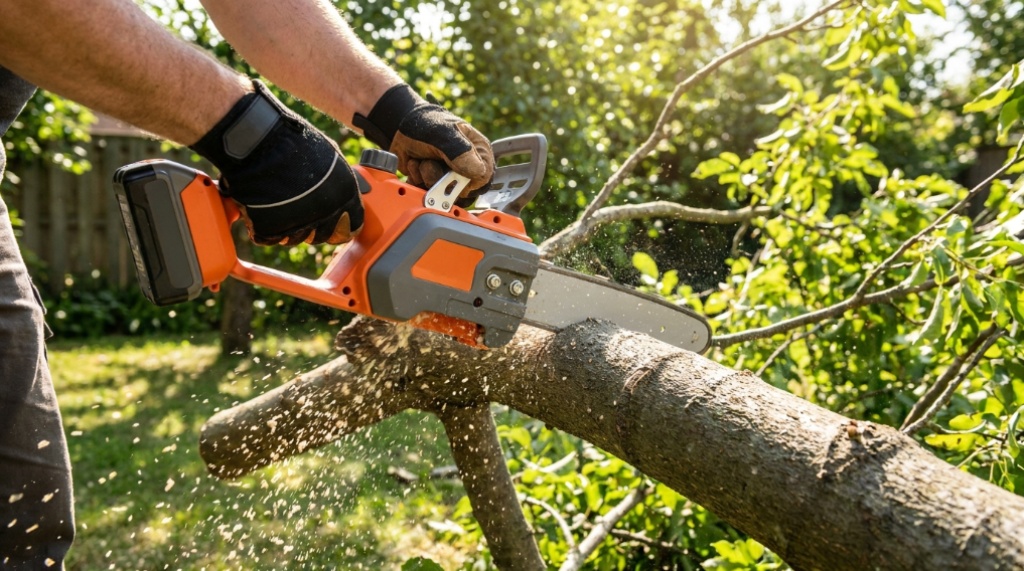
Branch trimming often happens in places a full-size saw cannot comfortably reach—between fence posts, inside dense shrubs, or up against a wall. The compact body and narrow bar of a mini chainsaw let you maneuver into these gaps without wrestling a long bar through the branches.
This is where the format genuinely outperforms larger tools. You can position the saw precisely, make a clean cut, and withdraw without dragging the bar against surrounding growth. That precision reduces the risk of bark tearing, which is a common entry point for disease on trees and shrubs.
The limitation is reach. A short bar means you cannot cut through a thick limb in one pass from a single angle. You will need to work around the branch or make multiple cuts, which takes longer and demands more planning than a single sweep with a bigger saw.
Reason 3: Instant Start and No Fuel Management
There is no choke, no primer bulb, no pull cord, and no mixing two-stroke fuel. Press the trigger and the chain moves. For homeowners who trim branches a few times a year, that convenience matters because it removes the maintenance rituals that make gas saws frustrating for intermittent use.
It also means the tool can sit in a garage or shed for months and still work when you need it, provided the battery is charged. Gas saws, by contrast, can be difficult to start after long storage if fuel has degraded in the carburetor.
Reason 4: Quieter Operation Opens Up More Use Cases
Electric mini chainsaws run far quieter than gas models. That makes early-morning or evening trimming less disruptive to neighbors, and it makes hearing protection less critical—though eye protection and gloves remain essential regardless.
Quieter operation also improves communication. If you are working with someone spotting branches or clearing debris, you can hear warnings and instructions without shouting. That is a small but real safety benefit in a team setting.
Reason 5: Lower Vibration Reduces Hand Fatigue
Gas chainsaws transmit engine vibration through the handles, which causes numbness and reduces grip strength over time. Brushless electric motors produce much less vibration because there are fewer moving parts and no combustion pulses.
For anyone trimming more than a handful of branches in a session, reduced vibration is a meaningful comfort improvement. It also helps with cut quality, since a steadier hand produces a cleaner kerf and less binding.
Reason 6: Consistent Power Through the Cut
Battery-powered tools sometimes get criticized for fading as the charge drops. A brushless motor with electronic speed control largely solves this by maintaining output until the battery reaches its cutoff point, rather than tapering gradually.
In practice, this means the tenth cut feels similar to the first. That predictability helps you plan your work and avoids the frustrating situation where the saw suddenly stalls partway through a branch because the battery has sagged under load for professional property care tips, check out our guide on chicago lawn maintenance plans reviewed.
Reason 7: Easier Maintenance and Storage
There is no air filter to clean, no spark plug to replace, and no fuel system to winterize. Maintenance is largely limited to chain tensioning, sharpening, and keeping the bar oil reservoir filled. For a tool used seasonally, that simplicity keeps it ready without a pre-season tune-up.
Storage is equally straightforward. The compact size fits on a shelf, and the battery can be stored separately at partial charge to preserve its lifespan. That is a practical advantage over gas equipment, which needs careful handling to avoid stale fuel and varnish buildup.
What the Supstable Mini Chainsaw Is Not Designed For
Being clear about limits saves money and frustration. This class of tool is built for branches, saplings, and light clearing—not for felling trees, bucking firewood, or cutting through thick hardwood repeatedly.
| Task | Suitable for a Mini Chainsaw | Better Served By a Full-Size Saw |
|---|---|---|
| Branches up to a few inches in diameter | Yes | No need |
| Overhead limb removal | Yes, with care | Awkward and heavy |
| Trunks and large limbs | No | Yes |
| Firewood bucking | No | Yes |
| Shrub and sapling clearing | Yes | Overkill |
If most of your work falls in the right-hand column, a mini chainsaw will disappoint you regardless of motor quality. If most of it falls on the left, the format is a strong fit.
How to Get Better Results From Any Mini Chainsaw
Performance depends heavily on setup and technique, not just the tool. A few habits make a noticeable difference:
- Check chain tension before each session. A chain that is too loose can derail; too tight strains the motor and bar.
- Keep the chain sharp. A dull chain forces you to push, which increases kickback risk and drains the battery faster.
- Fill the bar oil reservoir. Running without lubrication accelerates bar and chain wear quickly.
- Let the chain reach full speed before touching wood, and use light pressure rather than forcing the cut.
- Cut at a slight angle and let the saw do the work; forcing it straight down into a limb increases binding.
These steps cost nothing and often matter more than the difference between two similarly priced models.
Frequently Asked Questions
Is a brushless motor worth the extra cost on a mini chainsaw?
For regular use, yes. A brushless motor delivers longer runtime, steadier power, and fewer wear components than a brushed motor. If you only trim a few branches once a year, a brushed model may be sufficient and cheaper.
What size branches can a mini chainsaw realistically cut?
Most mini chainsaws handle branches up to roughly the length of their bar, which is typically in the small-to-moderate range. Cutting anything thicker requires working from multiple angles and adds significant time and strain. Always match the tool to the branch diameter.
Do I need bar oil for a cordless mini chainsaw?
Yes. Even cordless models need bar and chain lubrication to reduce friction and wear. Check the reservoir before each session and refill as needed. Running dry shortens the life of the bar and chain noticeably.
Can a mini chainsaw replace a full-size chainsaw?
No. It is a complement, not a substitute. It excels at branches, saplings, and light clearing, but it lacks the power and bar length for felling, bucking firewood, or cutting thick hardwood.
How long does the battery last during branch trimming?
Runtime depends on battery capacity, wood type, branch thickness, and how aggressively you cut. Expect shorter runtime in green or dense wood and longer runtime in dry, thin branches. Carrying a spare battery is a practical way to avoid interruptions.
Is it safe to use a mini chainsaw one-handed?
Many compact models are designed with one-handed use in mind, but that does not remove the risks. Keep the chain away from your body, never cut above face level, wear eye and hand protection, and maintain a stable stance. Follow the manufacturer’s guidance for your specific model.
Conclusion
The Supstable mini chainsaw earns its place in branch trimming through low weight, brushless motor efficiency, instant starting, and easy maintenance—not through raw cutting power. It is the right tool when your work involves limbs, shrubs, and reach-limited cuts, and the wrong one when you need to fell trees or process firewood. Match the tool to the task, keep the chain sharp and tensioned, and the saw will handle most homeowner trimming jobs cleanly and with far less fatigue than a full-size alternative.