
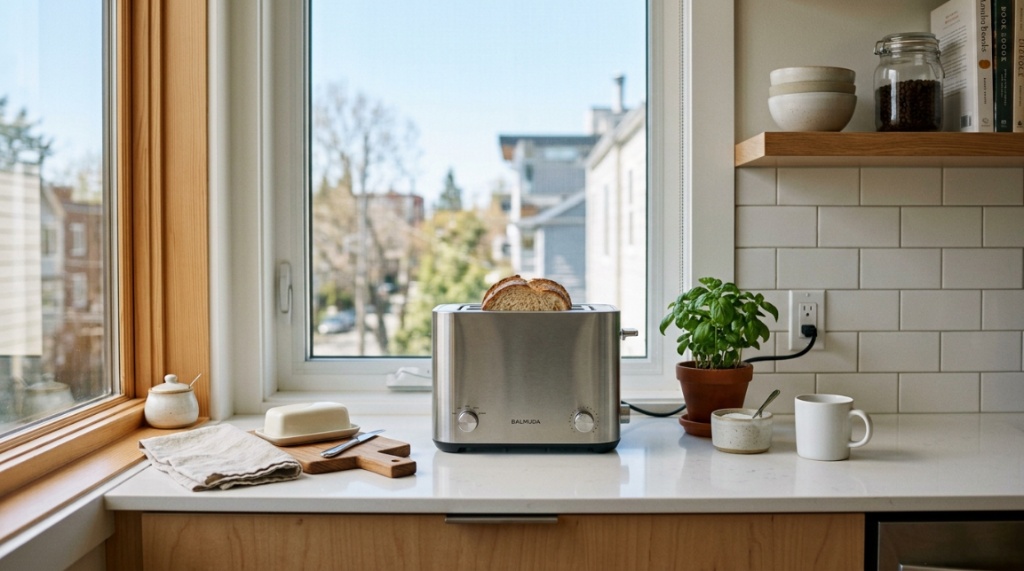
Living in a small apartment often means making every square inch of counter space count. When your kitchenette is compact, a bulky four-slice toaster can feel like a luxury you simply don’t have room for. Yet, you still want perfectly browned bagels, crispy waffles, and warm toast to start your morning without a complicated routine. The real challenge is finding a machine that balances performance, footprint, and price without sacrificing quality. This guide will help you identify the best affordable toaster for small apartments by breaking down what truly matters, what you can ignore, and how to make a smart purchase you won’t regret.
Thank you for reading this post, don't forget to subscribe!Key Takeaways
- Compact two-slice toasters are usually the sweet spot for small kitchens, balancing footprint with enough capacity for everyday use.
- Focus on essential features like adjustable browning, a cancel function, and a removable crumb tray rather than expensive extras you may rarely use.
- Measuring your available counter space before shopping is more important than choosing a color or style, as even “slim” models vary significantly in depth.
- A reliable budget toaster should still offer consistent browning and basic safety features, proving that affordability doesn’t have to mean flimsy construction.
- Consider where you will store the toaster when not in use, as cord management and vertical storage options add valuable flexibility in tight spaces.
Why Counter Space Dictates Your Toaster Choice
In a small apartment, your toaster isn’t just an appliance; it’s a permanent resident of your counter. If you live in a studio or a one-bedroom with a galley kitchen, having a wide appliance monopolizing valuable prep space is a major drawback. That’s why a standard two-slice model generally beats its larger counterpart. These units usually measure between 10 and 12 inches wide and just 7 to 8 inches deep. This footprint allows them to slide neatly under upper cabinets or fit snugly against the backsplash without overlapping into your food preparation zone.
Vertical vs. Horizontal Design
You’ll see two main shapes on the market: long and low versus tall and narrow. The long, low profile often feels sleeker but takes up more lateral space. Conversely, some compact models feature a more squared-off or vertical design. Before settling on one, measure the specific spot where you plan to keep it. If your counter is shallow, look for a model with a smaller depth measurement. If you intend to store it in a cabinet when not in use, confirm that its height fits comfortably on the shelf. A little bit of measuring ahead of time prevents the frustration of receiving a toaster that doesn’t fit your designated “toaster zone.”
Features That Matter Most on a Budget Model
You don’t need a toaster with digital displays, touch screens, or “smart” connectivity to get a good slice of toast. In fact, these high-tech features often inflate the price without improving the core function. When you are looking for an affordable toaster for small apartments, you should focus your attention on mechanics that directly affect usability. The most important components are the lever mechanism, the heating elements, and the control dial.
High-Lift Lever Mechanism
This is an overlooked detail that matters for everyone but especially if you like thick bagels or artisan bread. A high-lift lever raises the toast higher above the slot than a standard mechanism. This allows you to easily grab small items, like English muffins or a single slice of sourdough, without burning your fingertips. Test the lever action if you are shopping in a physical store; it should feel smooth and lock into place securely at the bottom.
Browning Control and Cancel Button
A reliable browning dial is non-negotiable. It adjusts the timing based on the resistance of the heating element, allowing you to go from a light golden hue to a dark, crispy finish. Just as important is a functional cancel button. This simple feature gives you immediate control to stop the cycle if your toast starts to smoke or if you realize you’ve set the darkness level too high. Look for a model where the cancel button is easy to see and press, as poorly placed buttons can be annoying during a rushed morning.
Evaluating Performance and Heating Consistency
Price often correlates with the quality of internal components. A 2-slice toaster with a lower wattage—typically around 700 to 800 watts—will toast more slowly than a higher-powered 900-watt model. While you might think slower is worse, slower toasting can actually lead to more even browning because it gives the heat time to penetrate the bread rather than just burning the surface. Pay close attention to whether a budget model has “auto-centering” guides. These are the small wire racks inside the slot that push the bread toward the center. If they are present, you get a consistently toasted surface regardless of the bread’s shape or thickness. Without them, the side closest to the heating element often gets darker, leading to uneven results.
Practical Considerations for Small Kitchens
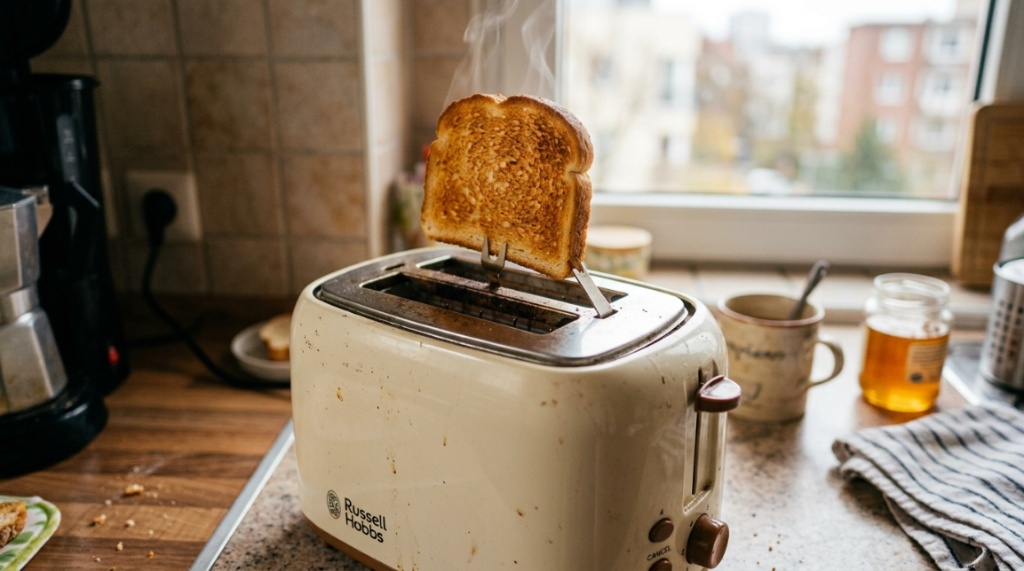
Beyond the toaster itself, consider the logistics of using it in a small space. You need to think about crumbs, heat, and where the cord goes. These practicalities often decide whether a toaster becomes a beloved morning tool or a frustrating clutter magnet.
The Importance of a Removable Crumb Tray
Cleaning a toaster in a small apartment can be a chore if you have to shake it upside down over the sink. A pull-out crumb tray solves this problem instantly. It slides out from the bottom, allowing you to dump the crumbs into the trash in seconds. Ensure the tray is accessible and easy to slide in and out. Some very budget-friendly models lack this feature, making them harder to keep clean and creating a potential fire hazard over time as crumbs accumulate around the heating elements, To keep your limited kitchen space completely organized, check out Six things that shouldn’t live on your kitchen worktops to free up even more room.
Cord Management
Small kitchens often lack sufficient outlets near the prep area. A long cord that dangles over the edge of the counter is both unsightly and dangerous. Look for a toaster with a built-in cord wrap on the base. This allows you to shorten the cord to just the length you need, keeping your counter tidy and preventing the cord from dragging into the sink or stove area.
Comparing Capacity: Two-Slice vs. Four-Slice
It is tempting to buy a four-slice toaster to save time, but in a small apartment, this often creates more problems than it solves. Most four-slice toasters are significantly wider and deeper than their two-slice counterparts. They also draw a lot of power—often exceeding 1200 watts—which can be an issue if your apartment has older electrical wiring or if you routinely run the toaster and a microwave on the same circuit. If you regularly need more than two slices, it is often more practical to toast in two batches. The first batch will stay warm while the second batch cooks, and you’ll have saved a substantial amount of permanent counter real estate.
| Feature | Two-Slice Compact Model | Four-Slice Full-Size Model |
|---|---|---|
| Average Footprint Width | 10–11 inches | 12–15 inches |
| Typical Power Consumption | 700–950 watts | 1200–1600 watts |
| Impact on Small Counter Space | Minimal; fits easily under cabinets | Significant; often requires dedicated space |
| Best For | Individuals, couples, or small households | Families or heavy breakfast routines |
Wattage and Apartment Electrical Loads
If you live in an older apartment building, the electrical circuits might not handle high-amp appliances well. A standard toaster draws between 8 and 10 amps. When you run it alongside a newer refrigerator or an air conditioner, you risk tripping a breaker. When selecting a budget toaster, look for one in the 700 to 900-watt range. This reduces the electrical load and is often perfectly sufficient for a two-slice batch. It is a small technical detail that can prevent a significant annoyance—losing power to your kitchen first thing in the morning.
Common Mistakes to Avoid
Many people end up disappointed with their toaster purchase because they overlook the details. One common mistake is choosing a toaster solely on aesthetics, only to find the exterior gets extremely hot to the touch. While all toasters emit heat, look for a model with a cooler-touch exterior—often achieved with a double-wall construction. This is crucial if your counter space is limited and the toaster sits close to other items.
Another mistake is ignoring the type of bread you eat. If you love thick, dense bread or oversized bagels, you need a toaster with wider slots. Standard slots are about 0.5 inches wide, but you’ll need at least 1.0 to 1.25 inches for bagels and thick bakery loaves. If the slots are too narrow, you’ll be forced to jam the bread in, which often leads to it getting stuck or toasting unevenly.
How to Test and Maintain Your Budget Toaster
Once you’ve selected a model, your first test should be a plain slice of white bread. Set the dial to medium and observe the browning pattern. Do this a few times to understand the dial’s calibration—some budget models have a dial that runs hot or cool compared to standard expectations. After you’ve figured out the ideal setting for your taste, you can adjust accordingly for frozen waffles or bagels.
Maintenance is straightforward. Never immerse the toaster in water or place it in the dishwasher. Unplug it and shake out the crumbs if it lacks a removable tray. Use a soft, dry brush to clean the interior slot to remove stray seeds or crumbs stuck near the element. Regular cleaning extends the life of the heating elements and prevents burning smells that can linger in a small apartment.
Frequently Asked Questions
Is a 2-slice toaster enough for a small household?
Yes, a 2-slice toaster is generally sufficient for one or two people. It warms up quickly and occupies far less counter space than larger models. If you have guests, you can simply toast in successive batches while the first batch stays warm.
What is the ideal wattage for a small toaster?
Look for a wattage between 700 and 900 watts for a compact model. This is high enough to toast evenly without placing excessive load on the circuit, which is particularly important in older apartment buildings with limited electrical capacity.
What features are not worth paying extra for?
Features like LCD screens, digital timers, and “smart” controls are rarely necessary for basic toasting. They add significant cost and complexity. Prioritize a mechanical browning dial, a cancel lever, a high-lift mechanism, and a crumb tray instead.
How do I clean a toaster without a crumb tray?
If your toaster lacks a removable crumb tray, unplug it and wait for it to cool completely. Take it to a sink or trash can, turn it upside down, and gently shake it to dislodge crumbs. Use a pastry brush to dislodge any stuck debris inside the slots.
Can I toast bagels in a slim toaster?
You can toast bagels if the slots are wide enough—at least 1 inch. If you slice the bagel yourself, you can get a thinner slice that fits better. Ensure the bagel setting is used if available, as this toasts the cut side with slightly reduced heat on the outer surface.
Conclusion
Finding an affordable toaster for a small apartment is less about finding the cheapest model and more about finding the most efficient one for your space. You should prioritize a compact footprint, reliable mechanical controls, and easy maintenance features like a crumb tray and cord wrap. By ignoring gimmicks and focusing on the core mechanics of heat and timing, you can secure a toaster that delivers perfect toast every morning without cluttering your home. Measure your counter, check the wattage, and choose a model that fits your actual eating habits. With these criteria in mind, you will find a small kitchen companion that makes your morning routine simpler and more enjoyable.