
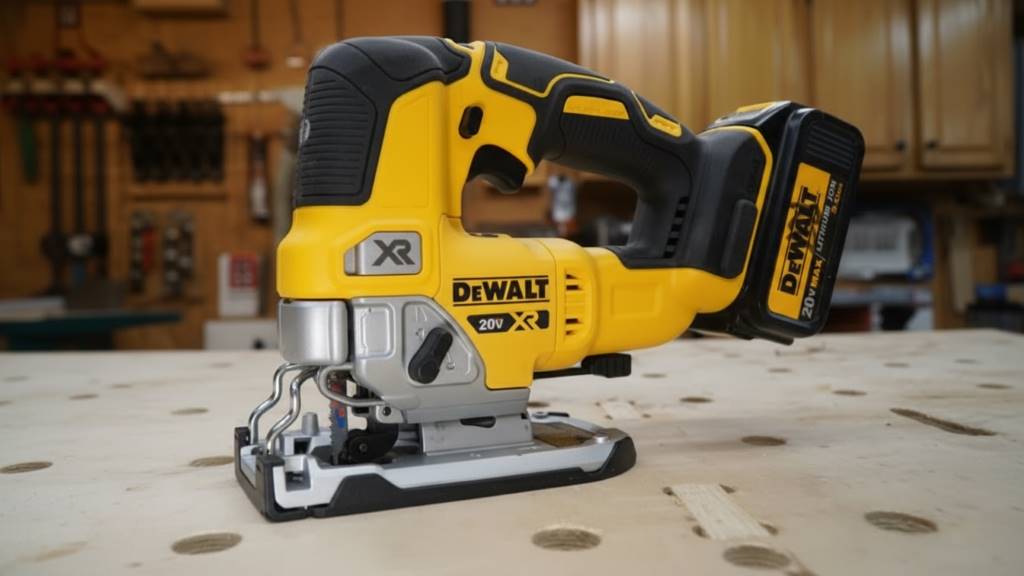
Imagine stepping into your workshop with a project that demands precision cuts through tough materials. You reach for a tool that feels like an extension of your hand. The DEWALT 20V MAX Jig Saw steps up to the challenge. This lightweight jig saw combines portability with robust performance for both pros and hobbyists. Professionals appreciate its ability to handle diverse tasks without fatigue. Additionally, statistics show the importance of reliable tools. For instance, the National Institutes of Health reports over 30,000 annual injuries from table saws alone in the U.S. Moreover, a study from the National Library of Medicine indicates that hand and upper extremity injuries make up about 44% of power tool-related emergency visits. Therefore, selecting a well-designed jig saw like this one promotes safer woodworking experiences. Overall, this breakdown explores why it stands out in today’s market.
Thank you for reading this post, don't forget to subscribe!Key Features That Set It Apart
Engineers at DEWALT crafted this jig saw with users in mind. First, consider its motor. The tool delivers impressive strokes per minute. Specifically, it reaches up to 3,000 SPM through a variable speed trigger. Craftspeople adjust speed on the fly for different materials. Consequently, you achieve smooth cuts in wood or metal without struggle.
Next, the four-position orbital action enhances versatility. Users switch settings to control cut aggression. For example, straight cuts benefit from zero orbital, while curved ones use higher settings. This feature adapts to your needs seamlessly. Furthermore, it optimizes efficiency across projects.
The keyless blade change system simplifies operations. You insert T-shank blades quickly with a lever action. No tools required for swaps. As a result, downtime decreases during busy sessions. Reviewers often praise this for saving time on job sites.
Bevel adjustments add another layer of functionality. The all-metal shoe bevels to 45 degrees with detents at common angles. You lock in positions like 0, 15, 30, or 45 degrees effortlessly. Thus, angled cuts become straightforward for crown molding or furniture assembly.
An integrated dust blower keeps your line of sight clear. It pushes debris away as you cut. Visibility improves dramatically in dusty environments. Additionally, this reduces cleanup efforts afterward.
Ergonomics play a crucial role here. The anti-slip grip provides comfort during extended use. Weighing just over five pounds, it minimizes hand strain. Hobbyists find it easy to maneuver in tight spots. Moreover, the compact design fits well in tool bags for transport.
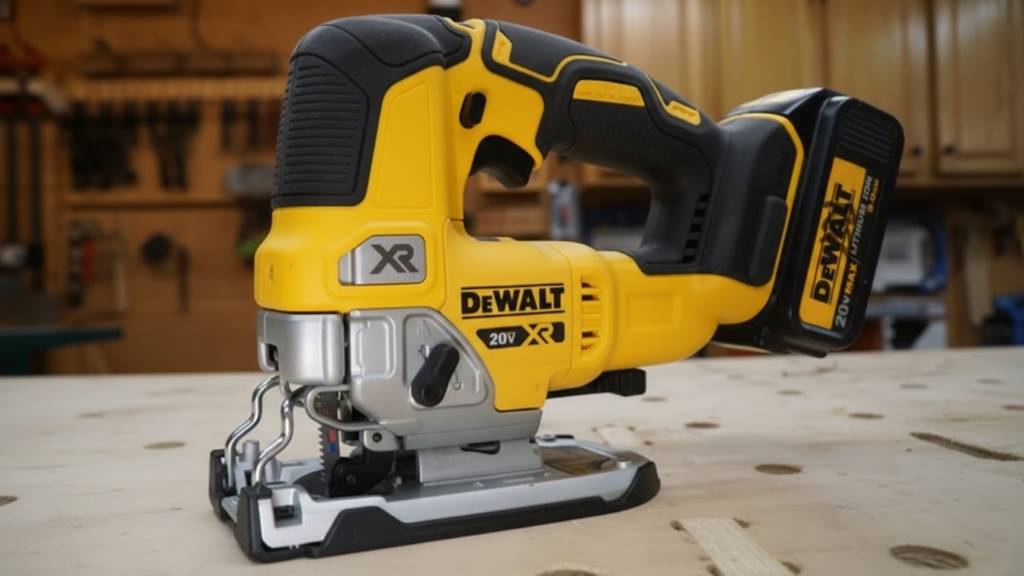
Benefits for Everyday Users
This jig saw transforms challenging tasks into manageable ones. Professionals tackle remodeling jobs with confidence. For instance, cutting laminate flooring goes faster with its power. Homeowners enjoy DIY projects without cord hassles.
Portability stands out as a major advantage. Battery operation means freedom from outlets. You work in remote areas like attics or outdoors easily. Consequently, productivity rises on various sites.
Durability ensures long-term reliability. Metal components withstand daily wear. Users report consistent performance over time. Furthermore, it handles thick materials up to one inch in stroke length.
Safety features protect you during operation. The trigger lock prevents accidental starts. You focus on precision without worry. Additionally, the design reduces vibration for better control.
Versatility extends to multiple applications. Woodworkers curve shapes in plywood effortlessly. Metal fabricators trim sheets accurately. Even plastic or ceramic tiles yield to the right blade. Therefore, one tool serves many purposes.
Efficiency comes from quick adjustments. Switch blades or angles in seconds. Projects flow smoother as a result. Moreover, the compact design allows access to confined spaces where larger tools fail.
How to Use It Effectively
Mastering this jig saw starts with preparation. Select the appropriate blade for your material. Wood requires coarse teeth, while metal needs finer ones. Install it securely using the keyless clamp.
Adjust the orbital setting next. Choose low for clean edges or high for rapid cuts. This step tailors the tool to your task. Then, set the bevel if angled work is needed.
Hold the grip firmly but comfortably. Engage the trigger gradually to build speed. Guide the saw along your marked line steadily. Always let the tool do the work without forcing it.
For curved cuts, pivot slowly around turns. Practice on scrap pieces first. You build skill through repetition. Additionally, use the dust blower to maintain visibility.
Pause periodically to check progress. Inspect cuts for accuracy. Make adjustments as necessary. Consequently, final results improve.
Follow these steps for best outcomes:
- Secure your workpiece on a stable surface.
- Mark cut lines clearly with a pencil.
- Start the saw away from the material edge.
- Move at a consistent pace.
- Release the trigger before lifting the tool.
These guidelines enhance safety and precision.
Applications in Woodworking Projects
This jig saw excels in furniture building. Crafters shape table legs with ease. The variable speed handles hardwood without burning. Moreover, bevel cuts create joints for chairs or cabinets.
Renovation tasks benefit greatly. Installers trim door frames accurately. You navigate around obstacles in walls or floors. As a result, fits become perfect.
Artistic endeavors thrive too. Sculptors carve intricate designs in panels. The compact design maneuvers through detailed patterns. Furthermore, it inspires creativity in custom signs.
Outdoor projects like decking use it well. Builders cut rails or boards on site. Cordless freedom speeds up assembly. Additionally, it manages treated lumber effectively.
Here are common uses:
- Cutting curves in plywood for shelves.
- Trimming metal pipes for plumbing fixtures.
- Shaping foam for upholstery work.
- Beveling edges on baseboards.
- Notching wood for electrical outlets.
Each application demonstrates its adaptability.
Maintenance Tips to Keep It Performing
Regular care extends the tool’s life. Clean the base after every use. Wipe away sawdust with a soft cloth. This prevents buildup that affects movement.
Inspect blades routinely. Replace dull ones promptly. Sharp edges ensure clean cuts and reduce strain. Moreover, store them in protective cases.
Lubricate moving parts occasionally. Apply light oil to the blade clamp. Smooth operation follows. Additionally, check the shoe for wear.
Store the jig saw in a dry place. Use a carrying case for protection. You avoid damage from moisture or impacts. Consequently, it stays ready for action.
Avoid overloading the tool. Match tasks to its capabilities. Proper use prevents overheating. Furthermore, allow cool-down periods during heavy sessions.
These practices maintain peak performance.
Comparing It to Traditional Options
Corded jig saws tether you to power sources. This model frees you from that limitation. Mobility increases dramatically. Professionals move between rooms without extension cords.
Wired tools often weigh more. The DEWALT version’s lightweight build reduces fatigue. You work longer with less effort. Moreover, its power rivals many plugged-in models.
Battery technology advances compatibility. It shares packs with other 20V tools. Users build ecosystems efficiently. As a result, convenience grows.
Orbital actions in older saws lack options. Four positions here provide superior control. Cuts adapt to materials better. Additionally, keyless features speed up workflows.
Overall, modern design outperforms dated alternatives.
Real-World Examples and Case Studies
Picture a carpenter renovating a historic home. Tight spaces demand precision. The jig saw’s compact design fits perfectly. He bevels trim around windows flawlessly. Projects finish ahead of schedule.
A hobbyist builds custom birdhouses. Curved roofs challenge most tools. Variable speed handles delicate wood. Designs come to life vividly. Satisfaction soars with each piece.
In a workshop class, students learn basics. The anti-slip grip builds confidence. They practice safe cuts under guidance. Skills develop quickly.
Another scenario involves metalwork. A fabricator shapes brackets. The dust blower clears views. Accurate fits result. Efficiency impresses clients.
These stories highlight practical value.
Enhancing Your Toolkit
Integrating this jig saw elevates your setup. Pair it with quality blades for optimal results. Experiment with types for various jobs. Discovery leads to better techniques.
Combine with clamps for stability. Secure materials prevent slips. Safety improves accordingly. Moreover, use guides for straight lines.
Explore accessories like LED lights. Some models add visibility in dim areas. You extend working hours. Additionally, vacuum attachments reduce mess.
Building a versatile collection starts here. This tool anchors power saw options. Expansion follows naturally.
Advanced Techniques for Pros
Seasoned users push boundaries. Try plunge cuts for interior openings. Lower the blade into material carefully. Precision holes emerge.
Layered cuts handle thick stock. Make multiple passes gradually. Control remains steady. Furthermore, it avoids blade binding.
Incorporate jigs for repetition. Custom templates ensure consistency. Production speeds up. As a result, quality stays high.
Refine edges post-cut. Sand lightly for smoothness. The jig saw sets the foundation. Finishing touches perfect the work.
These methods unlock full potential.
Related:
Quick Setup Power Tools for Busy Homeowners: AVID POWER 20V Essentials
Maintaining Optimal Airflow for Cooling in High-powered Tools
Safety First in Every Cut
Prioritize protection always. Wear eye goggles to shield from debris. Gloves guard hands too. You minimize risks effectively.
Maintain a clear workspace. Remove clutter before starting. Focus sharpens. Additionally, secure loose clothing.
Understand material properties. Know how wood or metal reacts. Adjustments prevent kickback. Moreover, rest when tired.
Train on basics if new. Tutorials build familiarity. Confidence grows safely.
Adhering to these keeps sessions incident-free.
Conclusion
This DEWALT 20V MAX Jig Saw blends power with ease. Key features like variable speed and orbital action deliver versatility. Benefits include portability and precision for diverse projects. Maintenance tips ensure lasting performance. Real examples show its impact in workshops. Overall, it empowers users to create with confidence. Now, grab yours and start your next project today.
FAQ
What blades does this jig saw accept?
It uses T-shank blades exclusively. These provide secure holding for professional results. Users switch them easily for different materials.
How does the variable speed work?
The trigger controls speed from 0 to 3,000 SPM. You squeeze gently for slow starts. This allows adaptation to wood, metal, or plastic.
Can it handle bevel cuts?
Yes, the shoe adjusts to 45 degrees. Detents lock at 0, 15, 30, and 45. Angled work becomes simple.
Is it suitable for beginners?
Absolutely, the ergonomic grip aids control. Safety features like trigger lock help too. Practice builds skill quickly.
What makes it compact?
Its design measures just over 11 inches long. Lightweight at 5.4 pounds, it fits tight spaces. Portability shines in various settings.
References