
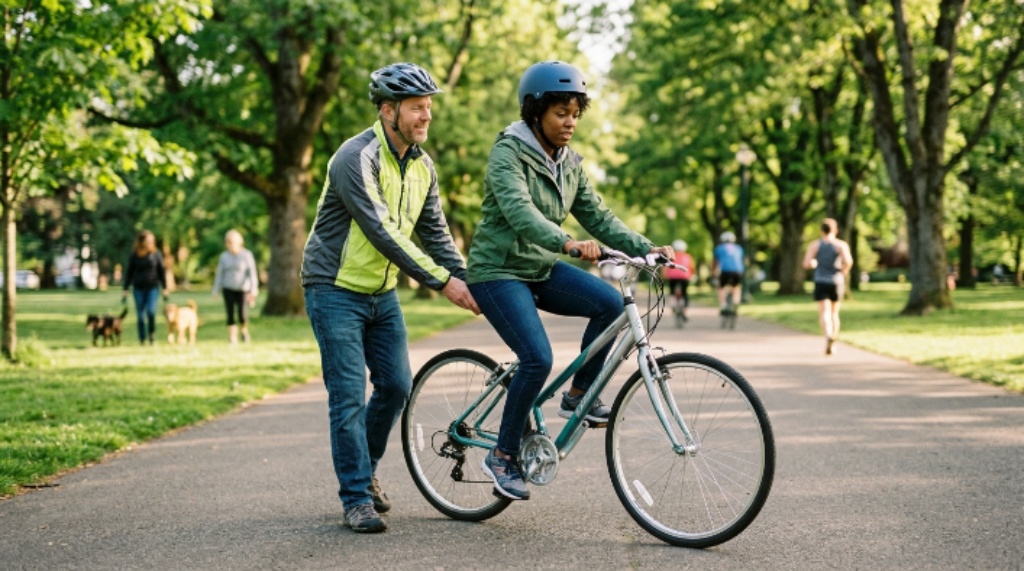
Starting cycling as a beginner requires three things: a comfortable bike, basic safety gear, and a gradual riding plan. Begin with short rides on quiet roads, learn essential bike controls, and increase distance only after your body adapts. Cycling offers a practical way to build cardiovascular fitness while spending time outdoors. Regular cycling can strengthen your heart, legs, and core while supporting healthy weight management.
Thank you for reading this post, don't forget to subscribe!The CDC recommends at least 150 minutes of moderate intensity aerobic activity each week for adults. You do not need to reach that target immediately, because consistent short rides can build your fitness safely.
Start With the Right Cycling Goal
Before buying equipment or planning routes, decide what you want cycling to accomplish. Your goal will influence your bike, riding schedule, equipment, and training intensity.
Some beginners want better fitness, while others want transportation, recreation, weight management, or social riding. Therefore, define one primary goal and one secondary goal before you begin.
For example, your goals might include:
- Ride three times each week.
- Complete a comfortable five mile ride.
- Cycle to nearby errands.
- Improve cardiovascular endurance.
- Build confidence riding outdoors.
Keep your first goal realistic and measurable. A simple target gives you something concrete to work toward without creating unnecessary pressure.
Find a Beginner Friendly Bike
You do not need an expensive bicycle to start cycling. Instead, look for a reliable bike that fits your body and matches the places where you expect to ride.
A hybrid bike works well for many beginners because it handles paved roads, bike paths, and light gravel. Road bikes suit riders who prioritize speed and longer paved rides. Mountain bikes work better when trails and rough surfaces matter most.
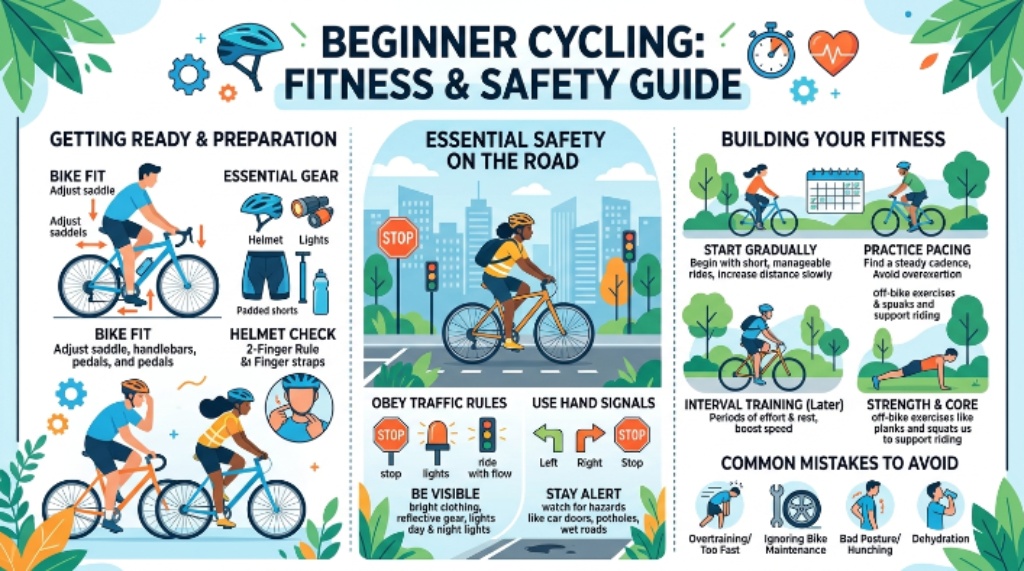
Check Your Bike Fit
Proper fit matters more than impressive components when you start riding. A poorly fitted bike can create discomfort and make longer rides unnecessarily difficult.
Check these areas before your first serious ride:
- Stand comfortably over the frame.
- Keep a slight bend in your knee at the bottom pedal position.
- Position the handlebars so you can reach them without straining.
- Keep your shoulders relaxed while holding the bars.
- Adjust the saddle height before increasing riding distance.
A local bike shop can perform a professional fit if you remain unsure. Small adjustments can significantly improve comfort and control.
Learn the Essential Cycling Gear
Cycling gear should solve practical problems rather than simply add equipment. Start with safety and comfort essentials, then add specialized items as your riding develops.
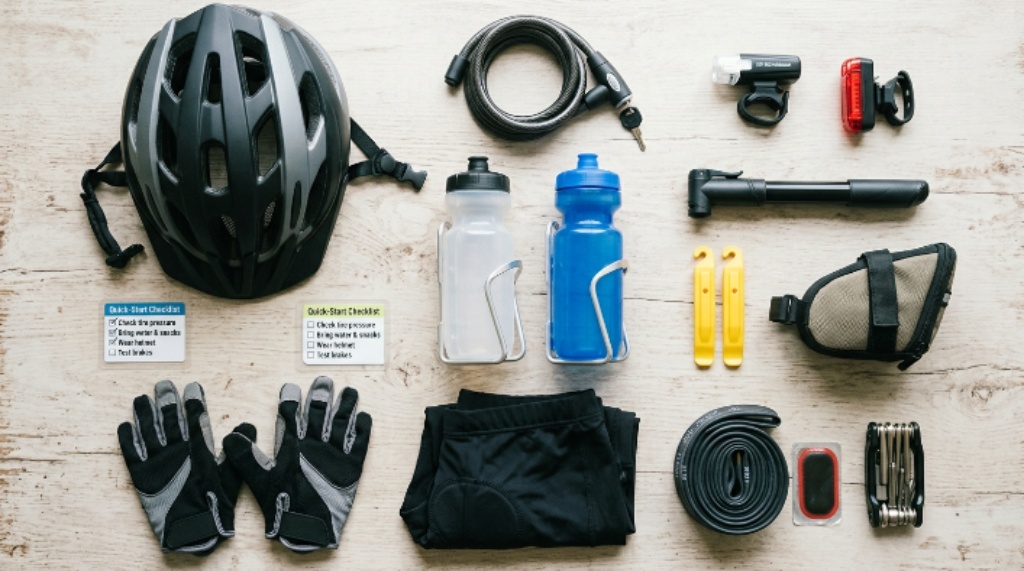
Your beginner setup should include:
- Properly fitted cycling helmet
- Front white light
- Rear red light
- Water bottle and cage
- Spare inner tube or repair kit
- Tire pump
- Basic multitool
- Comfortable clothing
- Reflective elements for visibility
- Small storage bag
A helmet should sit level on your head and remain secure during movement. Replace a helmet after a serious impact, even when you cannot see obvious damage.
Lights also matter during low visibility conditions. Use them whenever darkness, weather, traffic, or shaded roads reduce your visibility.
Wear Comfortable Cycling Clothing
You can start cycling in ordinary athletic clothing. However, specialized clothing becomes more useful as your rides become longer.
Choose breathable fabrics that manage sweat and allow unrestricted movement. Avoid loose clothing that can catch on moving bicycle components.
Padded cycling shorts can reduce discomfort during longer rides. However, beginners should focus equally on saddle fit, riding position, and gradual mileage.
Cycling gloves can also improve grip and reduce pressure on your hands. Sunglasses protect your eyes from sunlight, dust, insects, and wind.
Learn Basic Bike Controls Before Riding
Spend a few minutes practicing before entering traffic or crowded paths. Confidence comes from controlling the bicycle deliberately rather than reacting at the last moment.
Practice these skills in an empty parking area or quiet open space:
- Starting smoothly
- Stopping with both brakes
- Changing gears
- Looking over your shoulder
- Signaling turns
- Riding in a straight line
- Steering around small obstacles
- Starting again after stopping
Practice braking before you practice speed. You should know exactly how your bicycle responds when you apply the brakes firmly.
Use both brakes progressively rather than grabbing one brake suddenly. Keep your weight balanced and maintain control while slowing down.
Build Your First Cycling Routine
Your first training plan should feel manageable enough to repeat. Starting too aggressively often creates soreness, fatigue, and frustration.
Begin with three rides per week. Keep most sessions around 20 to 30 minutes during your first week.
A simple progression can look like this:
- Week one: Three rides of 20 to 30 minutes.
- Week two: Three rides of 25 to 35 minutes.
- Week three: Three rides of 30 to 40 minutes.
- Week four: Three rides of 35 to 45 minutes.
Increase duration gradually when your body handles the current workload comfortably. You can then add distance, hills, or short faster efforts.
Use the Right Intensity
Beginners often ride too hard because speed feels like progress. However, sustainable cycling depends more on controlled effort than constant intensity.
Use the talk test to judge your effort. During an easy or moderate ride, you should still speak several sentences without gasping.
Most beginner rides should remain comfortable. Later, you can add short harder efforts to improve fitness without turning every ride into a race.
Learn How to Shift Gears
Gears help you maintain a comfortable pedaling rhythm across different terrain. Beginners often make cycling harder by waiting too long before changing gears.
Shift into an easier gear before reaching a steep hill. This approach reduces strain and helps you maintain steady momentum.
On flat roads, gradually use harder gears when your current gear feels too easy. Aim for smooth pedaling rather than forcing the pedals with heavy resistance.
Avoid changing several gears unnecessarily when your speed remains stable. Instead, anticipate terrain changes and shift before your legs become overloaded.
Plan Safe Beginner Routes
Your route can determine whether your first cycling experiences feel enjoyable or stressful. Therefore, prioritize predictable roads, dedicated bike paths, and areas with manageable traffic.
For your first rides, look for:
- Low traffic streets
- Protected bike lanes
- Multi use paths
- Gentle terrain
- Reliable road surfaces
- Convenient places to stop
- Familiar neighborhoods
Avoid busy intersections and complicated roads until you gain confidence. You can gradually introduce more challenging routes as your handling skills improve.
Before leaving, check the route distance and elevation. A short route with steep climbs can feel harder than a longer route on mostly flat terrain.
Follow Essential Cycling Safety Rules
Traffic awareness matters every time you ride near vehicles. Follow local traffic laws and ride predictably rather than making sudden movements.
Keep your attention focused on the road ahead. Watch for turning vehicles, parked cars, pedestrians, opening doors, potholes, debris, and changing road conditions.
Use clear hand signals when turning or changing position. However, never sacrifice control simply to signal.
Stay alert around intersections because drivers may not see cyclists immediately. Make eye contact when practical, but never assume another road user sees you.
Increase Your Visibility
Visibility becomes especially important during dawn, dusk, nighttime, rain, and heavy traffic. Bright clothing, reflective details, and properly positioned lights can make you easier to detect.
Use a front light and rear light whenever conditions reduce visibility. Keep both lights charged and check them before every ride.
Do not rely on reflective clothing alone. Active lighting gives approaching road users a clearer indication of your position.
Check Your Bicycle Before Every Ride
A quick inspection can prevent many avoidable problems. Develop a simple routine and perform it before leaving home.
Check these five areas:
- Tires: Confirm proper inflation and inspect for visible damage.
- Brakes: Squeeze both levers and confirm strong braking.
- Wheels: Check that they spin smoothly without obvious wobbling.
- Chain: Look for excessive dirt, dryness, or unusual noise.
- Quick releases and bolts: Confirm important components remain secure.
You do not need mechanical expertise for this inspection. If something feels loose, damaged, or unusual, stop and investigate before riding.
Learn Simple Roadside Repairs
Every cyclist should know how to handle a basic flat tire. A puncture can end a ride quickly when you lack the necessary tools or knowledge.
Carry a spare tube, tire levers, pump, and basic multitool. Practice removing and reinstalling a tube at home before you need the skill outdoors.
You should also learn how to:
- Inflate a tire correctly.
- Remove a damaged tube.
- Install a replacement tube.
- Reattach the wheel securely.
- Reconnect a slipped chain.
- Make basic saddle adjustments.
These skills improve independence and reduce anxiety during longer rides.
Fuel and Hydrate Your Rides
Short beginner rides usually do not require complicated sports nutrition. For most rides under an hour, water and a normal balanced diet provide sufficient support.
Drink water before you become noticeably thirsty. During longer or hotter rides, increase your fluid intake according to conditions and personal needs.
For rides lasting substantially longer, carry an easy carbohydrate source. Bananas, energy bars, or simple snacks can help maintain energy when your ride extends beyond your normal routine.
After longer sessions, eat a balanced meal containing carbohydrates and protein. This combination supports energy replacement and muscle recovery.
Handle Soreness the Smart Way
Some muscle soreness can occur when you introduce cycling to an inactive routine. However, sharp pain, persistent joint pain, numbness, or worsening discomfort deserves attention.
Give your body recovery time between harder sessions. Sleep, hydration, adequate food, and gradual training all support adaptation.
If your knees hurt, first examine saddle height, gear selection, pedaling technique, and training volume. Persistent pain warrants evaluation by an appropriate healthcare professional.
Progress Without Racing Yourself
Cycling becomes more rewarding when you measure progress beyond speed. Beginners often improve rapidly during the first several weeks simply because their bodies adapt to repeated activity.
Track useful markers such as:
- Riding duration
- Distance
- Average effort
- Recovery time
- Climbing ability
- Comfort level
- Number of weekly rides
Do not compare your early performance with experienced cyclists. Instead, compare your current ability with your own previous rides.
Eventually, you can introduce structured goals. You might aim for a 10 mile ride, a longer weekend route, a charity event, or a regular commuting schedule.
Common Beginner Cycling Mistakes
Avoiding common mistakes can make your learning curve considerably easier. Most problems come from doing too much too soon or overlooking basic preparation.
Starting With Long Distances
Long first rides can produce unnecessary soreness and fatigue. Start shorter and increase duration as your comfort improves.
Ignoring Bike Fit
A poorly positioned saddle or handlebar can cause discomfort even during easy rides. Address fit problems early rather than adapting to an uncomfortable position.
Riding Too Hard
Constantly pushing maximum effort makes recovery harder. Keep most rides comfortable and introduce intensity gradually.
Skipping Safety Equipment
A helmet, lights, and basic repair equipment provide practical protection and confidence. Treat these items as part of your cycling setup rather than optional extras.
Forgetting Weather Conditions
Heat, rain, wind, and cold can change your riding experience quickly. Check conditions before leaving and adjust your route, clothing, hydration, and timing accordingly.
A Simple First Month Cycling Plan
A structured first month can remove much of the uncertainty surrounding beginner training. Use this framework while adjusting duration according to your current fitness.
Week One
Ride three times for 20 to 30 minutes. Focus on braking, shifting, balance, and comfortable effort.
Week Two
Ride three times for 25 to 35 minutes. Add gentle hills while maintaining controlled breathing.
Week Three
Complete two moderate rides and one slightly longer ride. Practice smooth gear changes and steady pacing.
Week Four
Complete three rides of 35 to 45 minutes if recovery feels good. Finish the month with a comfortable route that tests your progress.
This plan should remain flexible rather than rigid. If fatigue increases, repeat the previous week instead of forcing progression.
Make Cycling a Sustainable Habit
The best cycling routine fits naturally into your life. A perfect training schedule means little if work, family, weather, or other responsibilities constantly disrupt it.
Choose specific riding windows that you can realistically maintain. Morning rides may work well for some people, while others prefer evenings or weekends.
Prepare your bike and equipment beforehand. Removing small barriers makes it easier to ride when motivation drops.
You can also create social accountability by joining a beginner cycling group. Riding with others can provide motivation while helping you learn practical road skills.
When Should Beginners Ride?
There is no universally perfect time to cycle. The best time usually combines comfortable weather, safe conditions, and a schedule you can maintain.
Morning rides can provide cooler conditions during hot weather. Evening rides may work better for people with daytime commitments.
Avoid cycling during extreme heat, severe storms, poor visibility, or unsafe road conditions. Your training plan should adapt to the environment rather than fight it.
Final Checklist Before Your First Ride
Use this checklist before heading outside:
- Bike fits comfortably.
- Tires have appropriate pressure.
- Brakes work correctly.
- Chain moves smoothly.
- Helmet fits securely.
- Lights work properly.
- Water bottle is filled.
- Repair tools are packed.
- Route is familiar and manageable.
- Phone and essential identification are available.
Once these basics are ready, start slowly and focus on control. Your first ride does not need to be impressive because consistency creates lasting progress.
Conclusion
Starting cycling as a beginner becomes much easier when you prioritize fit, safety, gradual training, and practical skills. Start with short rides, learn your bicycle, protect yourself, and increase your workload only when your body adapts.
Most importantly, make cycling enjoyable enough to repeat every week. Choose a safe route, prepare your equipment, and take your first ride today rather than waiting for perfect conditions.
FAQs
How long should a beginner cycle?
A beginner should start with about 20 to 30 minutes per ride and gradually increase duration as fitness improves.
What bike is best for a cycling beginner?
A hybrid bicycle suits many beginners because it provides comfortable handling across paved roads, bike paths, and light gravel.
What gear does a beginner cyclist need?
A beginner needs a properly fitted helmet, lights, water, basic repair tools, suitable clothing, and a comfortable bicycle.
How many days a week should beginners cycle?
Three cycling sessions per week provide a practical starting point for building fitness while allowing recovery between rides.
Is cycling good for beginners trying to improve fitness?
Yes, cycling provides low impact aerobic exercise that can improve cardiovascular fitness while strengthening the lower body.